Boys Winter Layering Outfits: Five Practical Looks
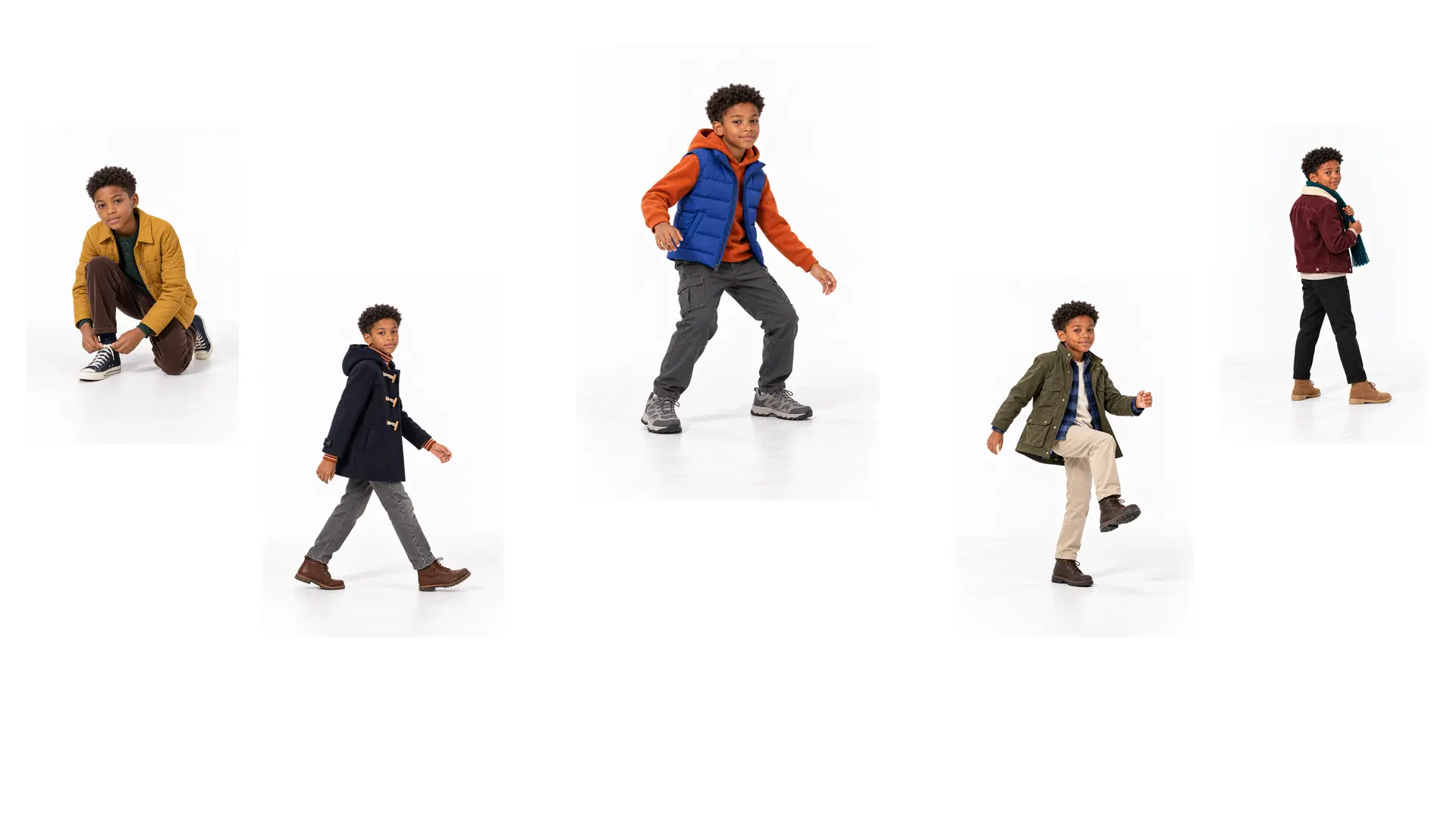
Five boys winter layering outfits built with practical removable layers, comfortable fabrics and easy movement for school and weekends.
Boys winter layering outfits work best when each piece has a clear job and a child can still walk, sit, play and carry a school bag comfortably. The five looks in this guide use removable layers, practical fabrics and secure footwear rather than relying on one bulky coat. They are designed for boys aged roughly 9–12, but the useful ideas—room through the shoulders, adjustable warmth and repeatable colour combinations—can be adapted to younger or older children.
Boys Winter Layering Outfits Start With Three Useful Layers
A practical winter outfit usually has three functional zones. A base layer sits closest to the body and should feel soft, breathable and easy to wash. A mid layer adds warmth; this may be a waffle henley, merino sweater, fleece hoodie or flannel shirt. An outer layer protects the child from wind or light weather while giving the outfit its strongest colour and shape.
The exact combination should respond to the forecast and the activity. A child walking to school in damp wind needs a different outer layer from one spending a dry afternoon indoors. For active outdoor time, moisture management matters because damp clothing can become uncomfortable quickly. The familiar base–insulation–shell system is a useful starting point, but it is not a command to wear every possible layer at once. Removable pieces make it easier to cool down indoors and add warmth outdoors.
Fit is the quiet test that makes layering work. Check that the coat closes over the mid layer without pulling across the back, that cuffs do not swallow the hands and that trousers allow a deep knee bend. The child should be able to lift both arms overhead, squat, take a long step and turn the torso without the outfit riding up or twisting.
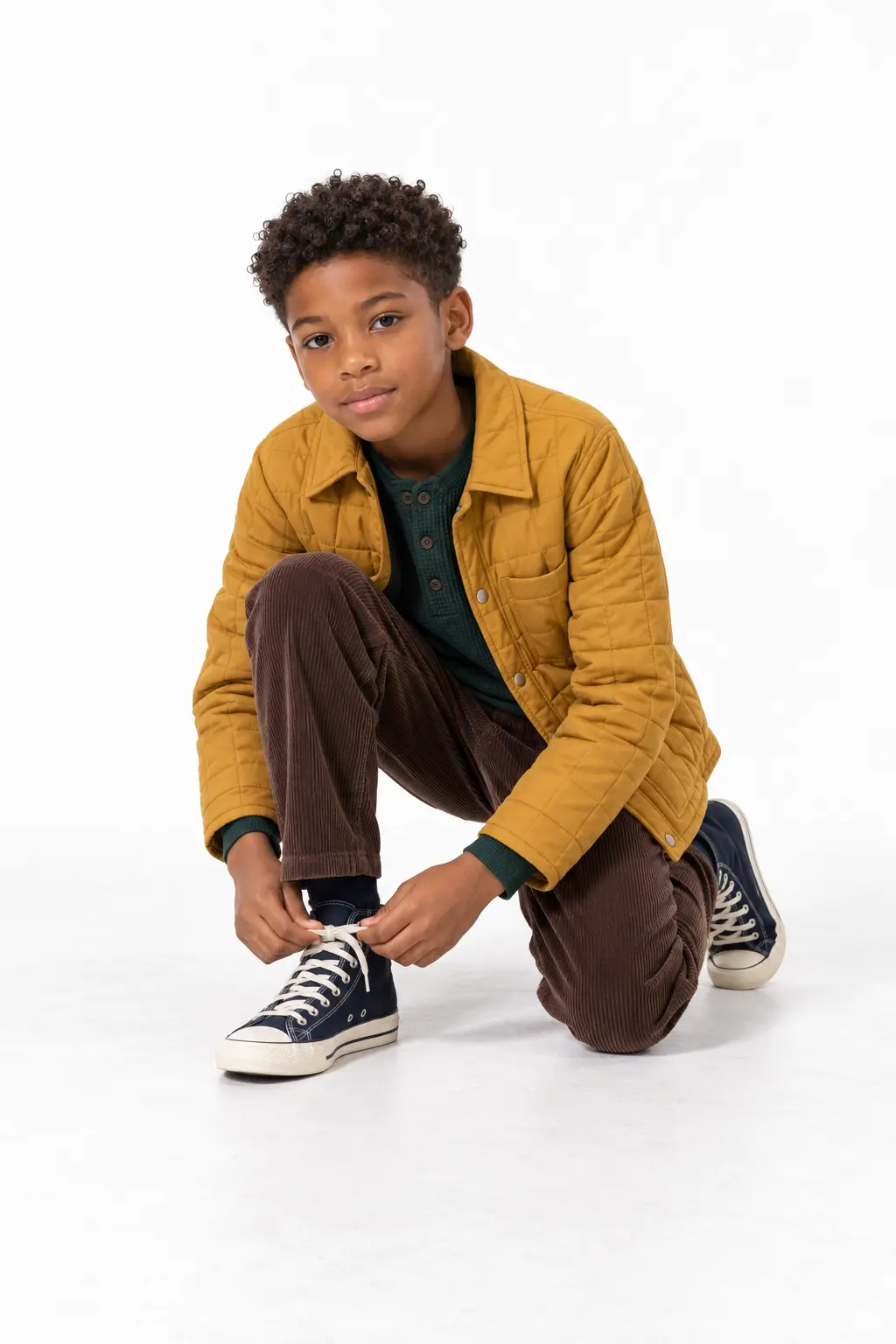
Look 1: Quilted Chore Jacket and Corduroy Trousers
The first look pairs a mustard quilted chore jacket with a forest-green waffle henley, chocolate corduroy trousers and navy high-top sneakers. The jacket supplies light insulation without the volume of a heavy parka, while the straight corduroy trousers bring texture and enough structure for a neat school-day appearance.
This outfit works well for a dry, cool day or as an indoor-heavy combination. The snap-front jacket is quick to remove, and the henley remains presentable when the classroom warms up. For colder weather, add a thin thermal base layer beneath the henley rather than squeezing a second bulky knit under the jacket.
Keep the trouser hem clear of the sneaker sole. Corduroy looks substantial, but excess fabric bunching around the ankle can make walking awkward. Navy footwear connects the dark green and brown tones without turning the outfit into a strict matching set. The mustard outer layer also makes the child easier to spot in a busy schoolyard.
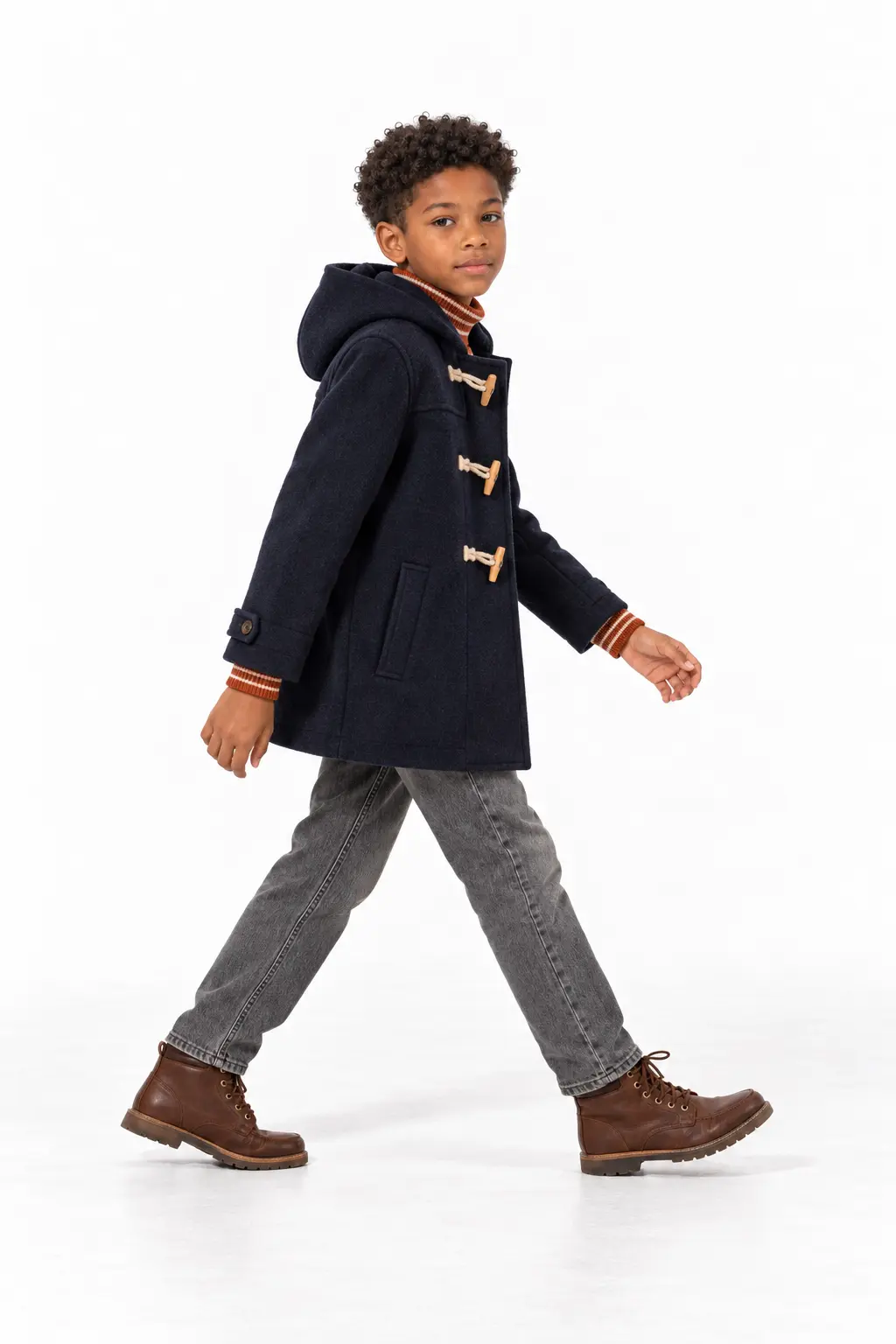
Look 2: Duffle Coat With Striped Turtleneck
An ink-navy duffle coat gives the second look a longer, more protective silhouette. Under it, a rust-and-cream striped turtleneck adds warmth at the neck and a small pattern. Grey straight-leg denim and brown lace-up boots keep the rest of the outfit calm and practical.
The toggle closures are visually distinctive, but they should also be easy for the child to operate. Test the coat both open and closed over the knit. A comfortable coat should leave room through the upper back when the arms swing forward. The hood should sit flat when it is not in use rather than creating a hard lump under a backpack.
This is the most polished school-and-weekend option in the set. It can handle a family lunch, a museum visit or an ordinary school day without feeling like formalwear. If the day is wet, choose a genuinely weatherproof coat instead of assuming wool-blend fabric will replace a rain shell. Style should never overrule the conditions.
Look 3: Puffer Vest, Fleece Hoodie and Cargo Trousers
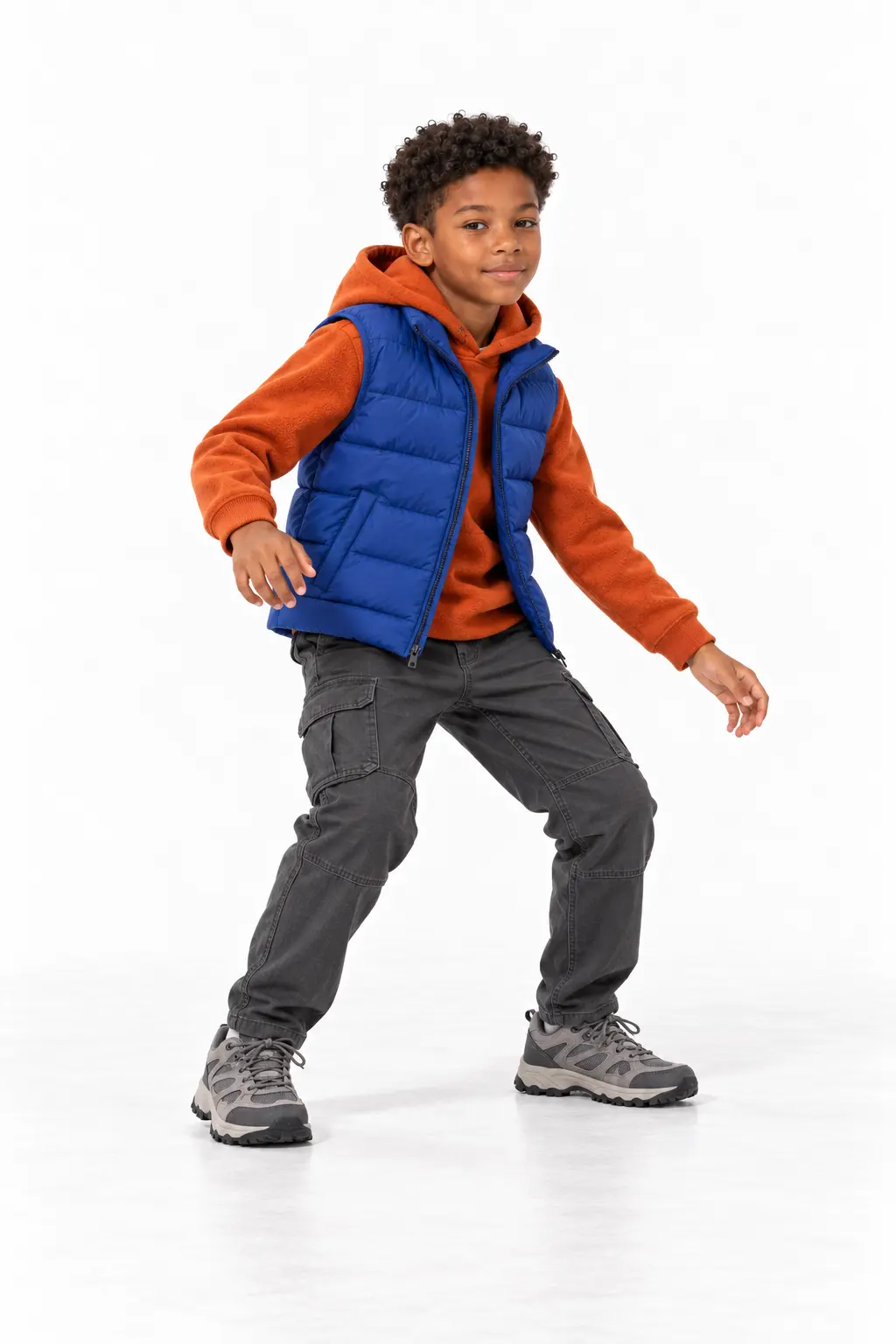
The cobalt puffer vest and burnt-orange fleece hoodie create a brighter, more athletic combination. Charcoal ripstop cargo trousers and grey trail sneakers support active movement and repeat the practical mood of the upper layers.
A vest is useful when a child wants warmth through the torso but freedom through the arms. It is especially adaptable for playground time, travel or a mild winter afternoon. The hoodie can be worn alone indoors, while the vest can be removed and packed without taking as much space as a full insulated coat.
Cargo pockets should lie flat and close securely. Overfilled side pockets can pull the trousers out of balance, so reserve them for light items. Check that the trouser knees bend cleanly and that the waistband remains comfortable when the child crouches. Trail-style sneakers suit dry active days; switch to waterproof footwear when the ground is wet or icy.
The cobalt, orange and charcoal palette is energetic but controlled. Two saturated colours work because the trousers and shoes are neutral. If a quieter result is preferred, keep the vest blue and replace the hoodie with heather grey or deep forest green.
Look 4: Waxed Field Jacket and Flannel Overshirt
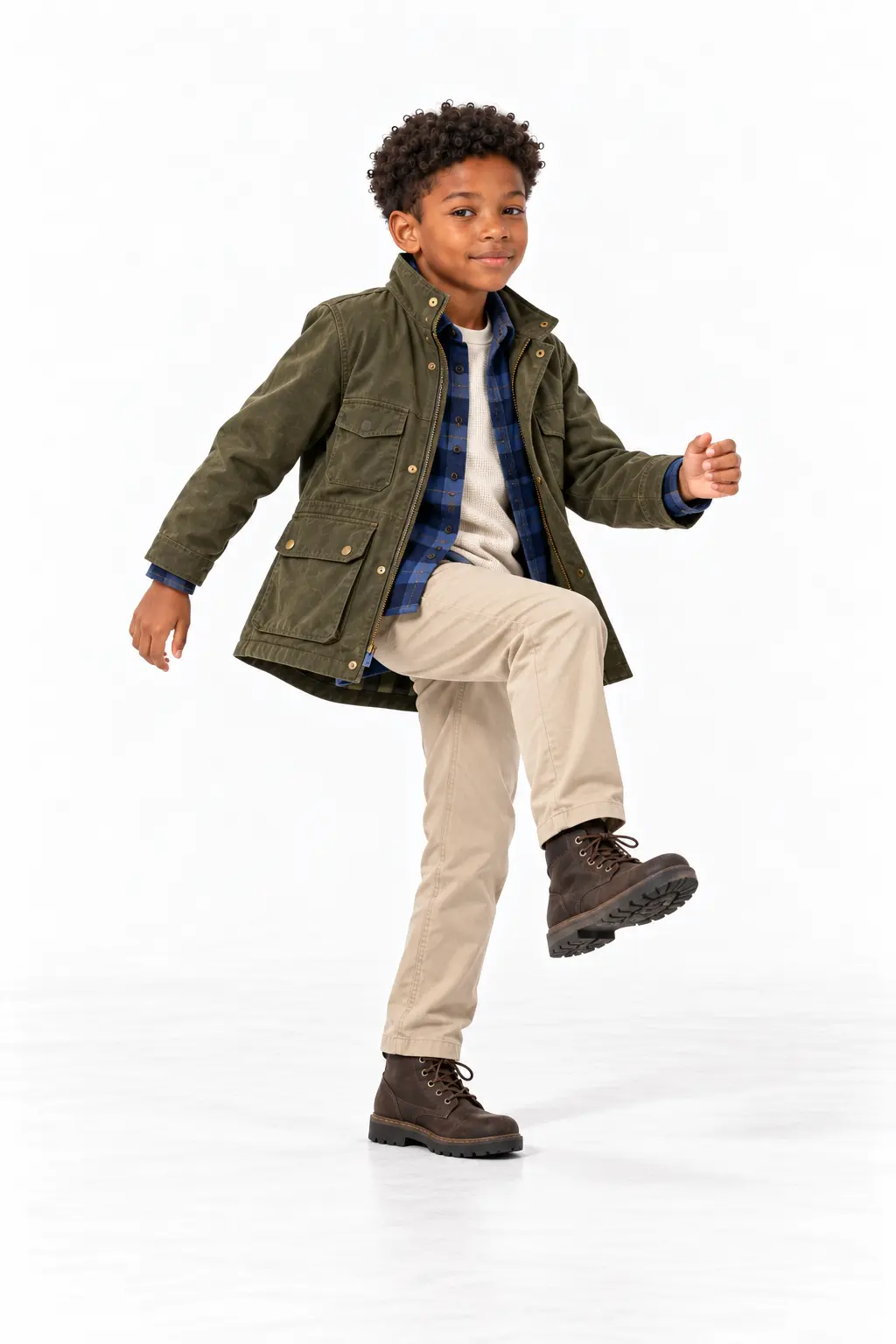
The fourth outfit uses an olive waxed field jacket, a blue flannel overshirt, an oatmeal thermal top, stone chinos and dark lace-up boots. It is the most visibly layered construction in the lookbook, yet each piece has a different role: the thermal is the soft base, the flannel is the adjustable mid layer and the field jacket provides the outer barrier.
This formula is useful for changing temperatures because the flannel can be worn buttoned, open or removed. The jacket's patch pockets add visual weight, so the straight stone chinos keep the lower half clean. Dark boots ground the pale trousers and make the outfit feel winter-ready.
Waxed cotton varies in water resistance and breathability, so follow the garment's care information and match it to the forecast. For sustained rain or snow, a purpose-built waterproof shell is more dependable. For dry cold, the same look can become warmer with a fine merino base layer and thicker socks, provided the boots still fit without pressure.
Look 5: Shearling-Collar Trucker and Merino Knit
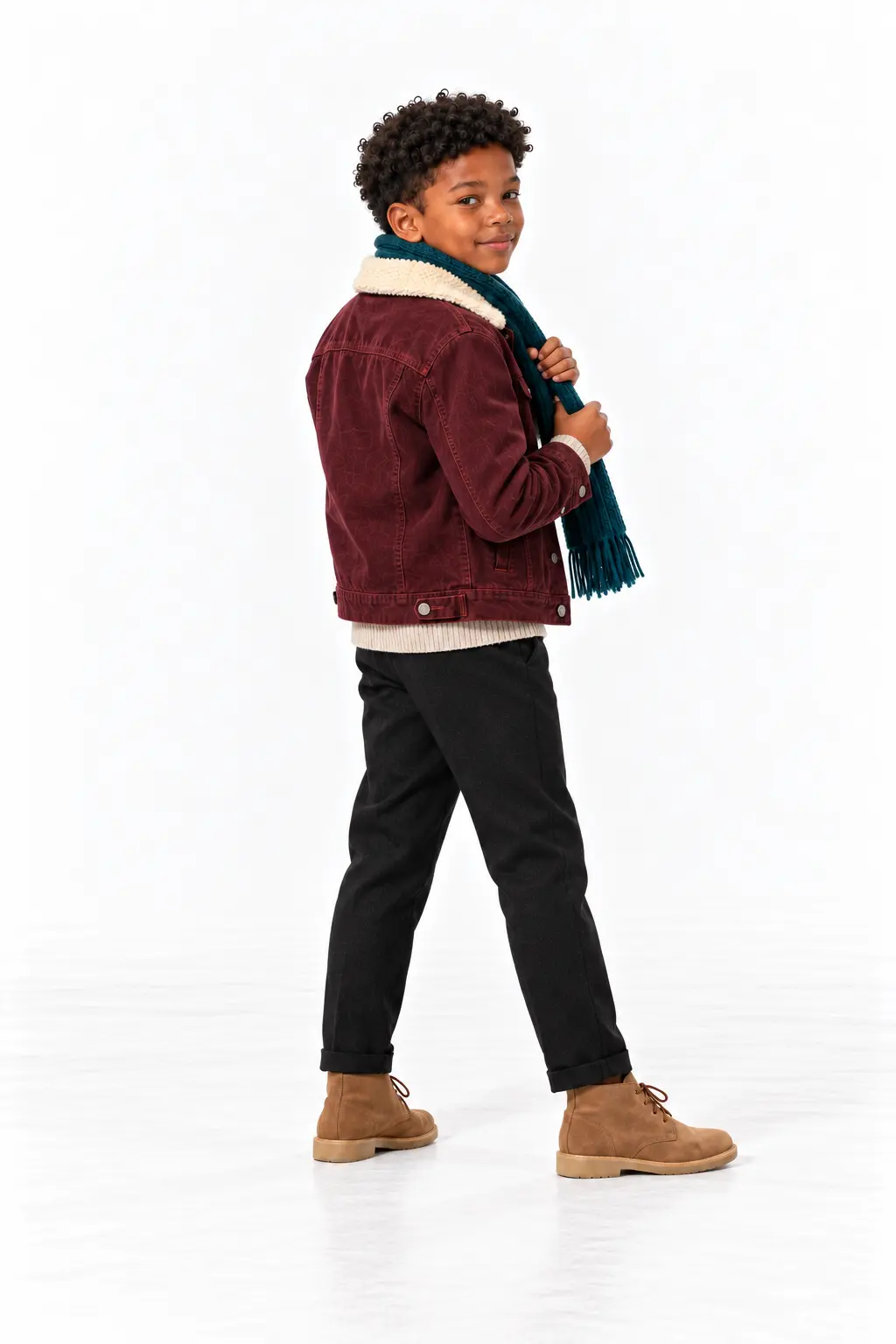
The last look combines a burgundy denim trucker jacket with a cream shearling collar, an oatmeal merino sweater, a deep-teal scarf, black tapered wool-blend trousers and tan chukka boots. It is the dressiest outfit in the set, but its pieces remain soft and easy to rewear.
The cropped trucker shape works because the trousers are neat without being tight. A longer sweater hem peeks out below the jacket, adding a small light break between burgundy and black. The scarf brings colour close to the face and can be removed as soon as the child goes indoors.
Check scarves carefully for length and secure fit, especially around play equipment or active settings. For school, a short loop, compact tuck or neck warmer may be more practical than long loose ends. The chukka boots should bend at the forefoot and hold the heel without rubbing. For slippery or wet conditions, choose soles designed for the surface rather than selecting footwear only by colour.
Build a Small Winter Rotation Instead of Five Separate Wardrobes
These looks become more useful when their parts cross over. The forest henley can sit under the field jacket. The oatmeal thermal can replace the striped turtleneck when a quieter base is needed. Grey denim works with the puffer vest, while the black tapered trousers can sharpen the duffle coat. Navy, olive, charcoal, brown and oatmeal form the repeatable core; mustard, cobalt, orange, burgundy and teal provide controlled accents.
A small rotation also makes morning decisions simpler. Choose two base tops, two mid layers, two outer layers, three pairs of trousers and two footwear options that work together. The goal is not a rigid capsule but a dependable set of combinations. Laundry frequency, climate, school uniform rules and the child's sensory preferences should decide the final number of pieces.
When buying, test the outfit rather than each item in isolation. A jacket may fit perfectly over a T-shirt but become restrictive over fleece. Boots that fit with thin socks may pinch with winter socks. Bring or wear the likely mid layer and socks during a fitting whenever possible.
Adjust the Formula for Different Winter Conditions
In mild winters, a breathable base, flannel or fleece mid layer and light jacket may be enough. In colder dry conditions, increase insulation with merino, fleece or a puffer layer. In wet or windy weather, prioritize an outer shell that is suited to those conditions. Hats, gloves and warm socks often make a bigger practical difference than adding another thick torso layer.
Indoor heating changes the equation. A child who moves between a cold journey and a warm classroom needs layers that come off easily and can be stored. Avoid complicated stacks that require removing several pieces just to cool down. Name labels, hanging loops and secure pockets help removable layers return home.
Colour can support practicality too. Mid-tone trousers hide ordinary wear better than very pale fabric, while a brighter coat or vest improves visibility. Reflective details may be useful for dark commutes, but they should be treated as a safety feature, not a fashion trend.
A Quick Fit and Movement Check
Before accepting any winter outfit, ask the child to raise both arms, cross them, sit, squat, walk quickly and bend to tie a shoe. Watch the collar, underarms, waistband, knees and boot opening. Pulling, twisting or red pressure marks indicate that a layer or size needs adjustment.
Then check temperature. The back of the neck should feel comfortably warm rather than sweaty after a few minutes of movement. If the child overheats, remove or lighten a mid layer. If the torso is comfortable but hands and feet are cold, improve gloves, socks or footwear rather than automatically adding another sweater.
Finally, listen to the child. Scratchy seams, heavy hoods and stiff waistbands can turn a technically warm outfit into one that is avoided. The best winter wardrobe is the one a child can manage independently and is willing to wear repeatedly.
Conclusion: Make Boys Winter Layering Outfits Easy to Adjust
The strongest boys winter layering outfits combine clear garment roles with room to move. Start with a comfortable base, add one useful insulating layer and choose outerwear for the actual weather. Repeat a small group of colours, vary the construction and test every combination in motion. That approach produces outfits that look considered in photographs and still work through school, weekends and changing temperatures.
Gallery
Frequently Asked Questions
How many layers should a boy wear in winter?+
What fabrics work well for an active child?+
Can a puffer vest replace a winter coat?+
How should winter layers fit under a school backpack?+
What shoes suit boys' winter outfits?+
Share this post
Related Posts
Five Womens Knit Skirt Outfits for Polished Layers
Five womens knit skirt outfits with clear proportions, practical layers and versatile shoes for polished fall-to-winter everyday dressing.
Read the story
Teen Capsule Wardrobe: 12 Pieces for School and Weekends
Start a teen capsule wardrobe with 12 useful pieces and five comfortable outfit formulas designed for school days, weekends, and changing weather.
Read the story
Girls Occasion Outfits: Five Comfortable Event Looks
Five girls occasion outfits that balance polished styling with soft fabrics, secure fits, practical footwear and room to move.
Read the story