Five Womens Knit Skirt Outfits for Polished Layers
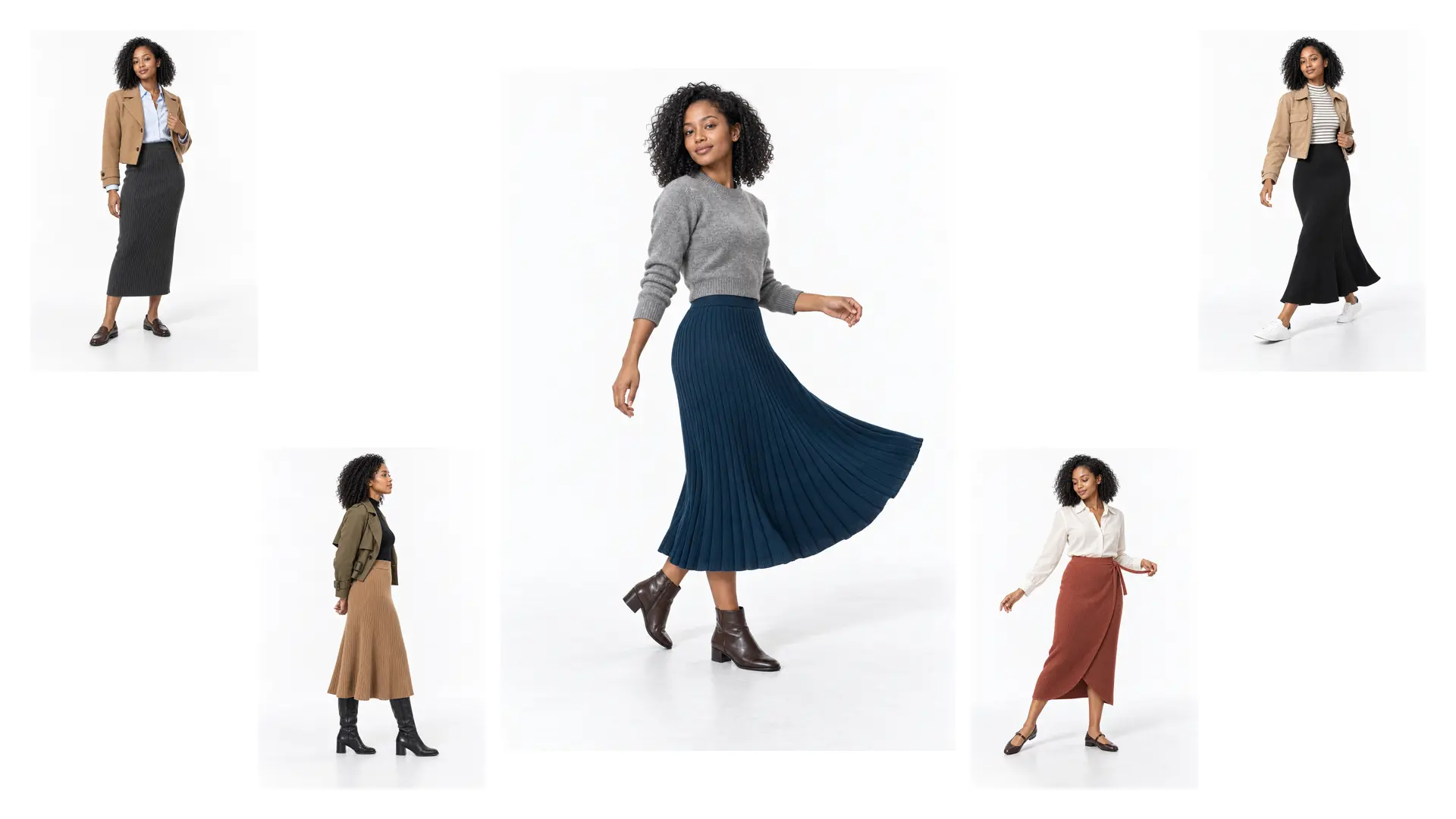
Five womens knit skirt outfits with clear proportions, practical layers and versatile shoes for polished fall-to-winter everyday dressing.
These five womens knit skirt outfits solve the main problem with soft skirts: how to keep the comfort while giving the outfit enough structure. The formulas below use five different skirt constructions—column, A-line, pleated, wrap and gored maxi—so the advice works across office days, weekends and cooler-weather plans. Each look also shows a different balance of volume, layer length and shoe weight rather than treating every knitted skirt like the same garment.
Why knit skirts work when the proportions are clear
A knitted skirt already brings texture and movement. It usually needs less decoration than a flat woven skirt, but it benefits from deliberate proportion. A fitted skirt can take a crisp shirt or a cropped jacket; a fuller skirt looks cleaner when the top ends close to the waistband; a long flared skirt needs footwear with enough visual presence to keep the hem from overwhelming the outfit.
The knit matters too. Fine ribbing follows the body closely, while a heavier gauge can hold an A-line shape. Pleated knits move differently from woven pleats because the material stretches as it opens. Wrap construction introduces a diagonal line that can create definition without a belt. Before choosing the top, check how the skirt hangs when you walk, sit and turn. That tells you whether it needs a smooth base layer, a shorter jacket or a more stable shoe.
Womens knit skirt outfits start with the right silhouette
The most useful starting point is not color but shape. A column skirt creates a long vertical line and works well with a defined shoulder. An A-line skirt adds volume below the waist, so a fitted base layer prevents the outfit from feeling heavy. Pleats create movement and look strongest when the top is simple. A wrap skirt already has a focal point at the tie and overlap. A gored maxi uses shaped panels to flare below the hip, making it a practical casual option when the upper half stays compact.
These are simply ways to control where the outfit changes direction. If a formula feels off, adjust one variable at a time: shorten the outer layer, swap a bulky top for a fine knit, or choose a cleaner shoe.
Look 1: charcoal rib-knit column with a cropped jacket
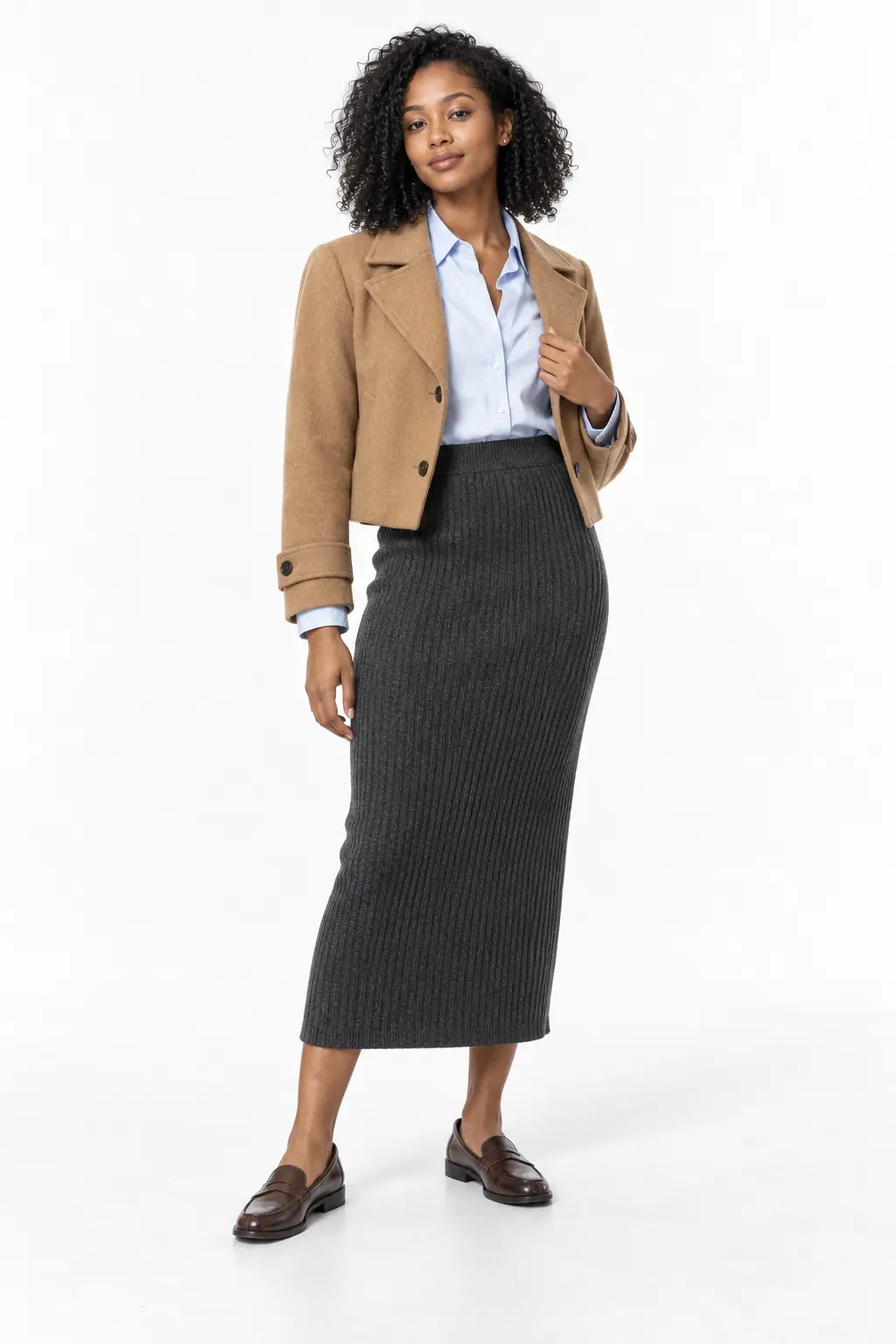
The first outfit pairs a charcoal rib-knit column midi with a powder-blue poplin shirt, a camel cropped wool jacket and chocolate penny loafers. The straight skirt gives the outfit one continuous dark line. A pale shirt adds contrast near the face, while the jacket finishes at the waistband instead of covering the narrowest point of the skirt.
This is the most office-ready formula in the lookbook. Keep the shirt fabric lighter than the skirt so the tuck does not create a thick ridge. If a full tuck feels bulky, use a close-fitting bodysuit-style shirt or a fine knit shell beneath the jacket. The loafers make the outfit polished without adding the visual weight of a tall boot.
For colder days, add tights close to the skirt color. This supports the vertical line instead of interrupting it with a high-contrast band.
Look 2: camel A-line knit with a fitted dark base
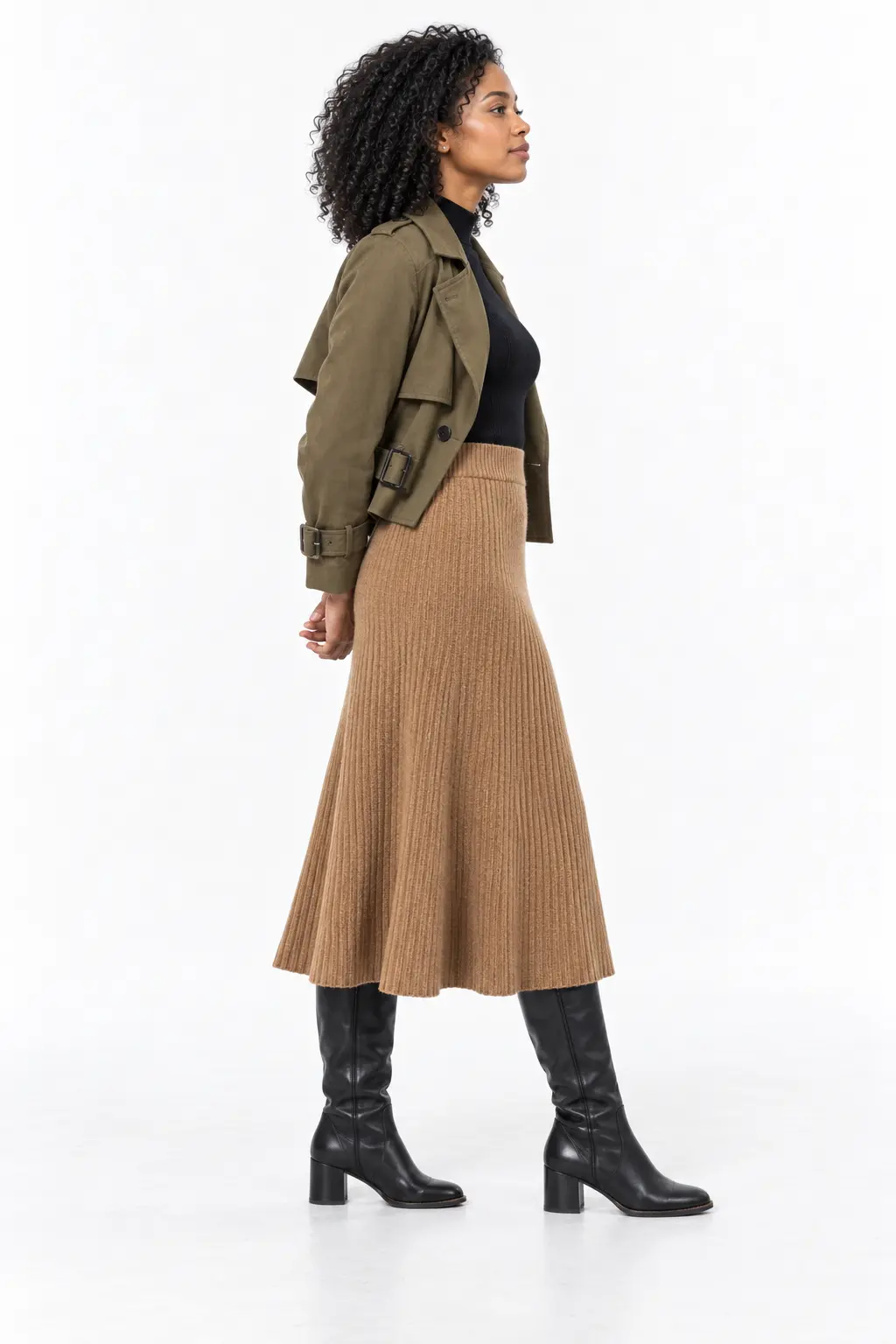
The second formula uses a camel knitted A-line midi, a fitted black mock neck, an olive cropped trench jacket and black knee boots. The skirt carries more volume than the column shape, so the close-fitting top keeps the upper body visually quiet. The short trench adds structure at the shoulders while leaving the waistband visible.
Tall boots work here because their shaft disappears under the midi hem. That produces a clean transition and avoids a strip of exposed leg on a cold day. Choose a boot with a slim or gently rounded toe rather than an oversized lug sole if the skirt is soft and fluid. The result should feel grounded, not bottom-heavy.
If camel is too warm for your wardrobe, the same formula works with stone, mushroom or soft grey. Keep the top and boots in a related dark family, then use the jacket as the middle tone. This three-step value pattern—light or medium skirt, dark base, mid-tone layer—makes the combination easy to repeat.
Look 3: petrol pleated knit with a cropped merino sweater
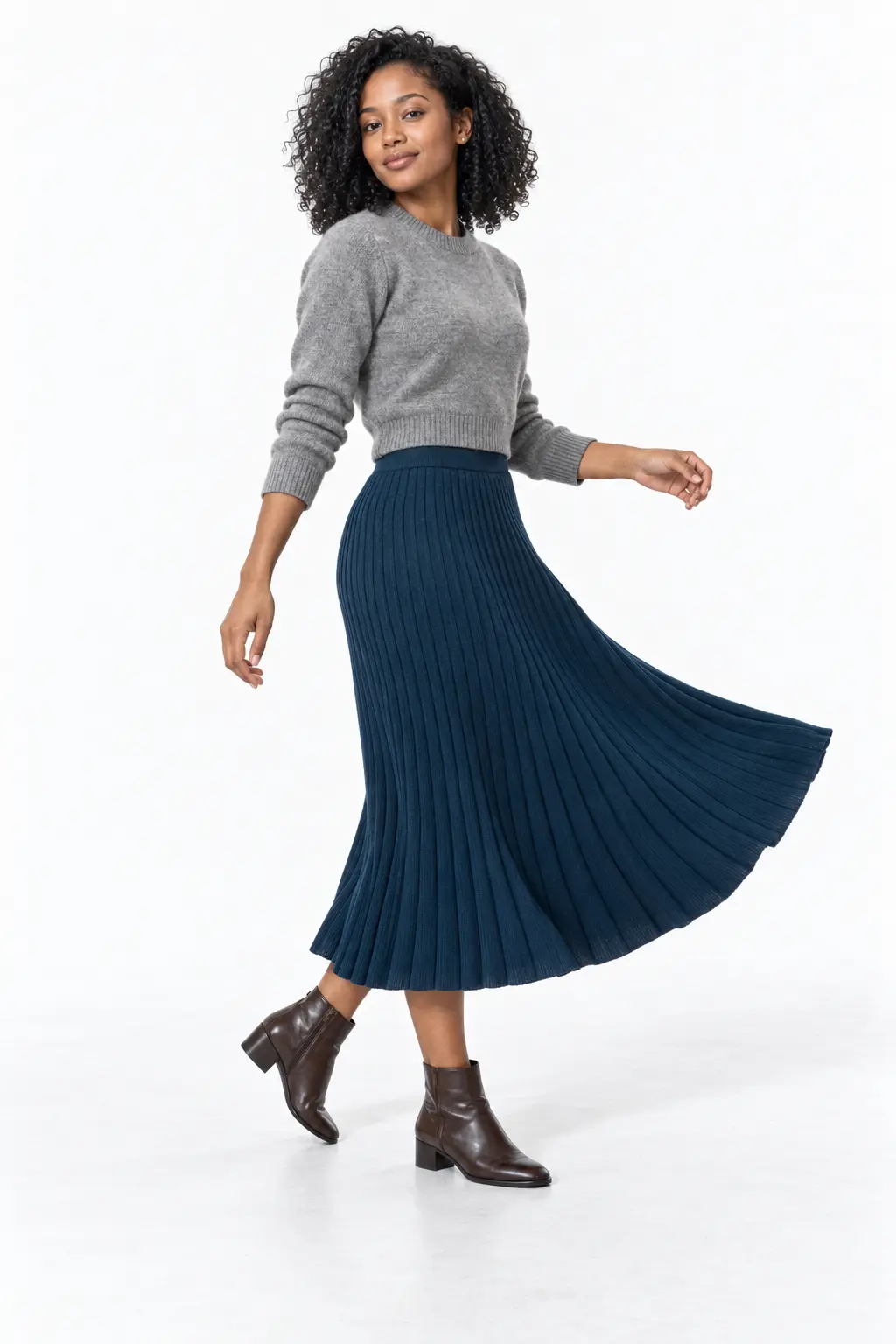
A deep petrol-blue pleated knit skirt is the movement piece of the set. It is paired with a heather-grey cropped merino crewneck and espresso ankle boots. The sweater ends at the waistband, allowing the pleats to open cleanly from their starting point. The boots add enough structure for the swinging hem without competing with its texture.
When styling knitted pleats, avoid a long top that presses them flat at the hip and then releases them abruptly. A short sweater, a neat half-tuck or a fitted cardigan worn closed will preserve the intended line. Keep accessories restrained because the pleats already create repeated vertical detail.
For work, add a tailored coat that falls below the skirt's widest point. For evening, exchange the crewneck for a fine-gauge boat neck and pointed ankle boot. The skirt remains the expressive element.
Look 4: burnt-coral wrap knit with an ivory blouse
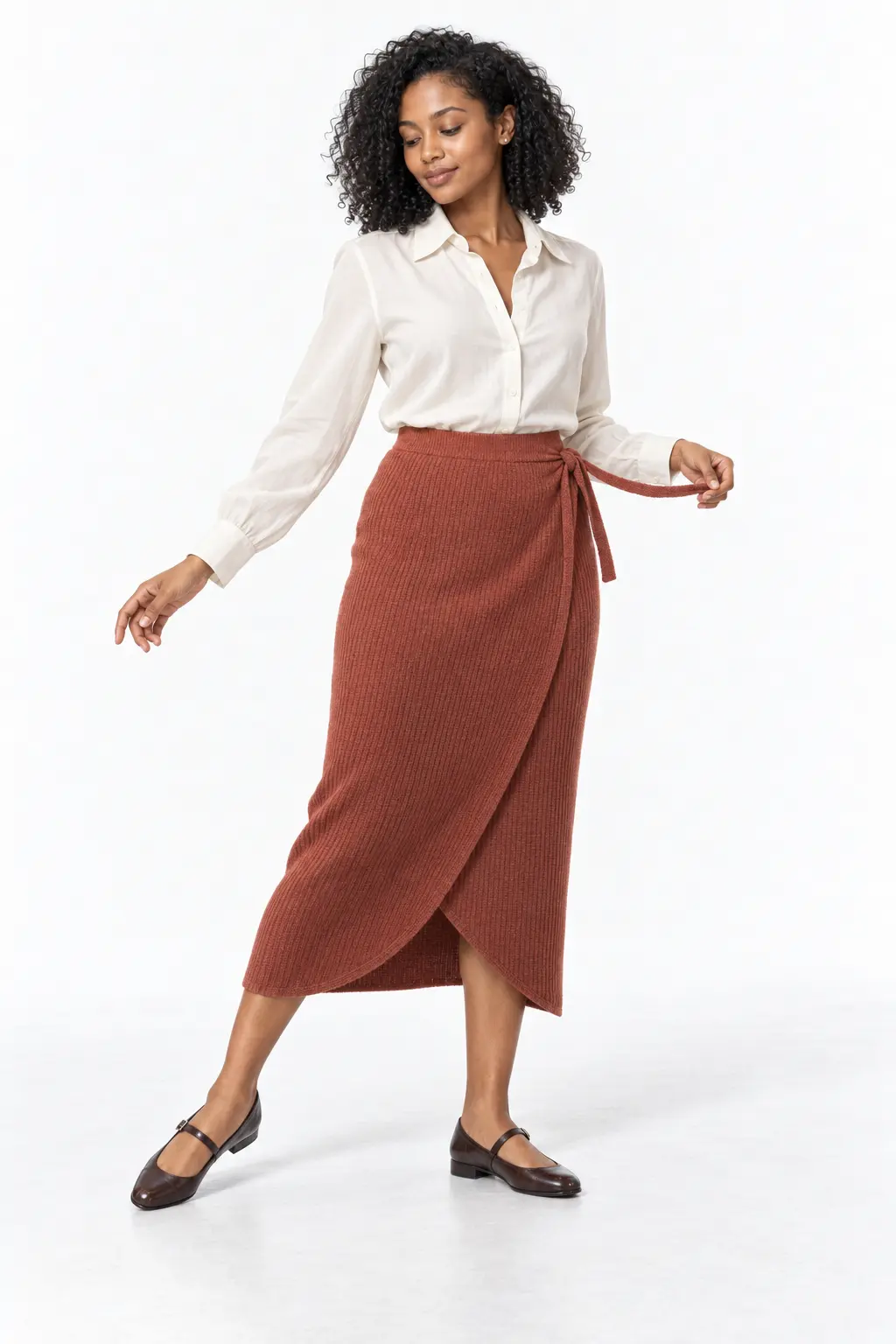
The fourth outfit combines a muted burnt-coral wrap midi with an ivory silk-cotton blouse and espresso Mary Jane flats. The diagonal overlap breaks up the vertical surface of the knit, while the functional tie adds definition without an extra belt. The blouse supplies soft polish and enough contrast to make the wrap construction easy to read.
Check the overlap before leaving home: it should stay secure when sitting and taking a long step. A smooth slip can improve drape, reduce cling and add coverage without changing the outer silhouette. If the wrap tie is long, knot it once and let the ends fall rather than building a bulky bow at the waist.
Mary Janes suit this formula because the strap gives the light shoe a visible anchor. A low block heel or refined ballet flat would also work. In wet weather, change to a sleek ankle boot and make sure its top sits comfortably below the hem opening.
Look 5: black gored maxi with stripes and sneakers
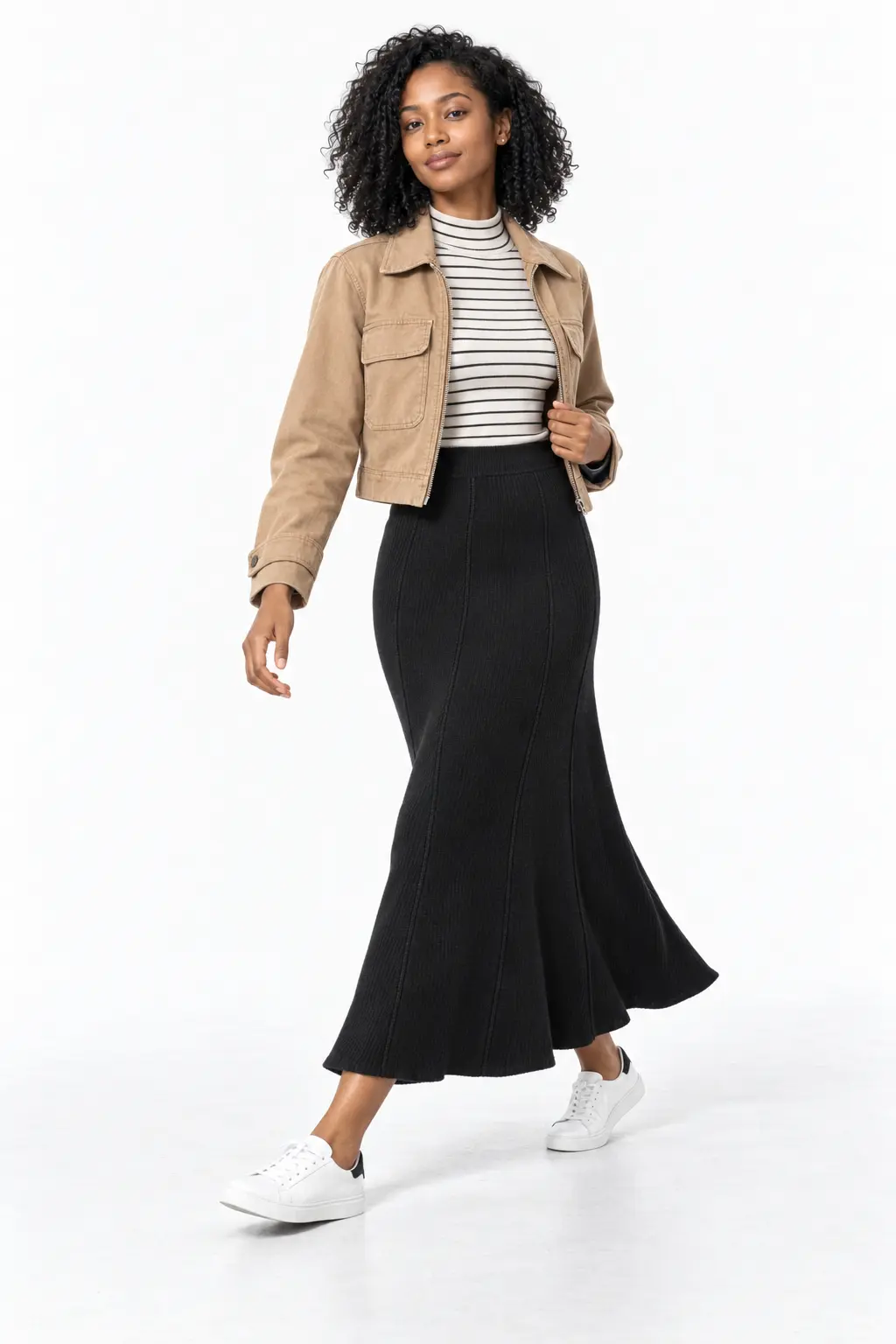
The casual formula uses a black fine-knit gored maxi, a narrow-striped mock neck, a sand utility jacket and white leather sneakers. The vertical panel seams control the flare until lower on the body, so the skirt can move without looking like a single heavy tube. The striped top introduces pattern, but its fitted shape keeps the upper half compact.
A cropped utility jacket gives this soft outfit sharper seams and practical pockets. Wear it open so the waistband and stripe direction remain visible. Clean low-top sneakers make the length feel intentional and comfortable for walking. Leave enough space between hem and floor to avoid catching the knit under the heel.
This is also the easiest travel formula. Replace the structured jacket with a short cardigan, or add a lightweight rain shell that finishes near the high hip. Keep the shoe sole moderate; very thick platforms can distort the long line created by the maxi skirt.
How to choose tops, layers and shoes
Use the skirt's volume to decide the top. Straight and column skirts can handle a crisp shirt, a boxy knit or a short jacket because the lower half remains narrow. A-line, pleated and gored skirts usually look cleaner with a top that ends at or close to the waistband. Wrap skirts can take a blouse, fitted knit or cardigan as long as the top does not hide the diagonal tie.
Outer layers should create a clear relationship with the hem. A cropped jacket exposes the waist and works with almost every silhouette in this edit. A long coat can also work when it falls below the widest part of the skirt. The difficult length is often a jacket that ends across the fullest point of a pleated or A-line skirt.
For shoes, think about visual weight. Loafers and Mary Janes keep a midi light and polished. Ankle boots work with pleats and straight hems when the shaft does not fight the skirt. Knee boots make sense under an A-line midi in cold weather. Sneakers belong with a casual maxi when the hem clears the sole and the upper outfit includes at least one structured element.
Seasonal adaptations without rebuilding the outfit
In mild weather, wear the skirt with a shirt, fine knit or light jacket. When temperatures fall, add a smooth base layer, tights and boots before reaching for an oversized sweater.
For winter, use a long coat, a fitted thermal top and hosiery that does not create static against the skirt. For spring, swap wool outerwear for cotton twill and choose loafers or flats. A knitted skirt can also work in transitional rain, but long hems should stay clear of wet pavement. The goal is to adapt the supporting pieces, not force one exact outfit through every climate.
Fabric, fit and care checks before buying
Inspect the waistband first. It should recover after stretching and sit flat without rolling. Look for straight side seams, secure hems and pleats or panels that align from the waistband. On a wrap skirt, confirm that the overlap is generous and the tie is anchored cleanly. Try the skirt with the intended shoes and sit down to test comfort, coverage and recovery.
Follow the care label because knit structure can change with heat and agitation. Fold heavier skirts rather than hanging them, and check that any lining hangs independently without pulling against the knit.
Conclusion: build repeatable knit-skirt formulas
The strongest womens knit skirt outfits do not depend on buying a matching set. They come from reading the skirt's construction, balancing its volume and choosing a layer and shoe that support its line. Start with one silhouette you already enjoy, then test the corresponding formula: crisp structure with a column, a fitted base with an A-line, a short top with pleats, a simple blouse with a wrap, or a compact jacket with a gored maxi. Those choices make the comfort of knitwear look deliberate rather than unfinished.
Gallery
Frequently Asked Questions
What top looks best with a knit midi skirt?+
Can a knit skirt work for an office outfit?+
How do I stop a knitted skirt from clinging?+
What shoes go with a long knit skirt?+
Are matching knit sets the only way to style a knitted skirt?+
Share this post
Related Posts
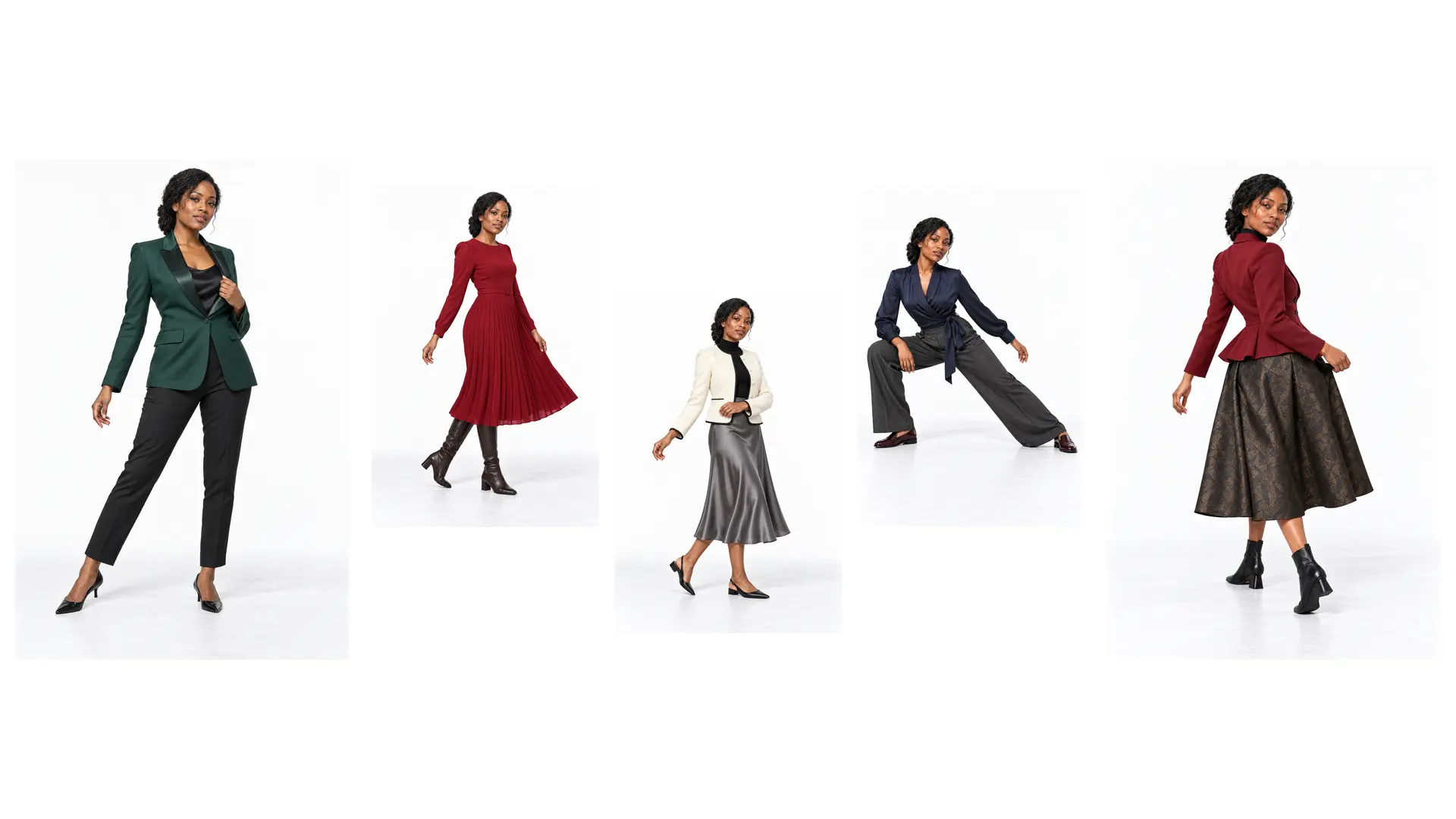
Womens Holiday Work Outfits: Five Office-Ready Looks
Five polished holiday work looks built around tailoring, midi skirts, rich colour, comfortable shoes and practical office-to-event styling.
Read the story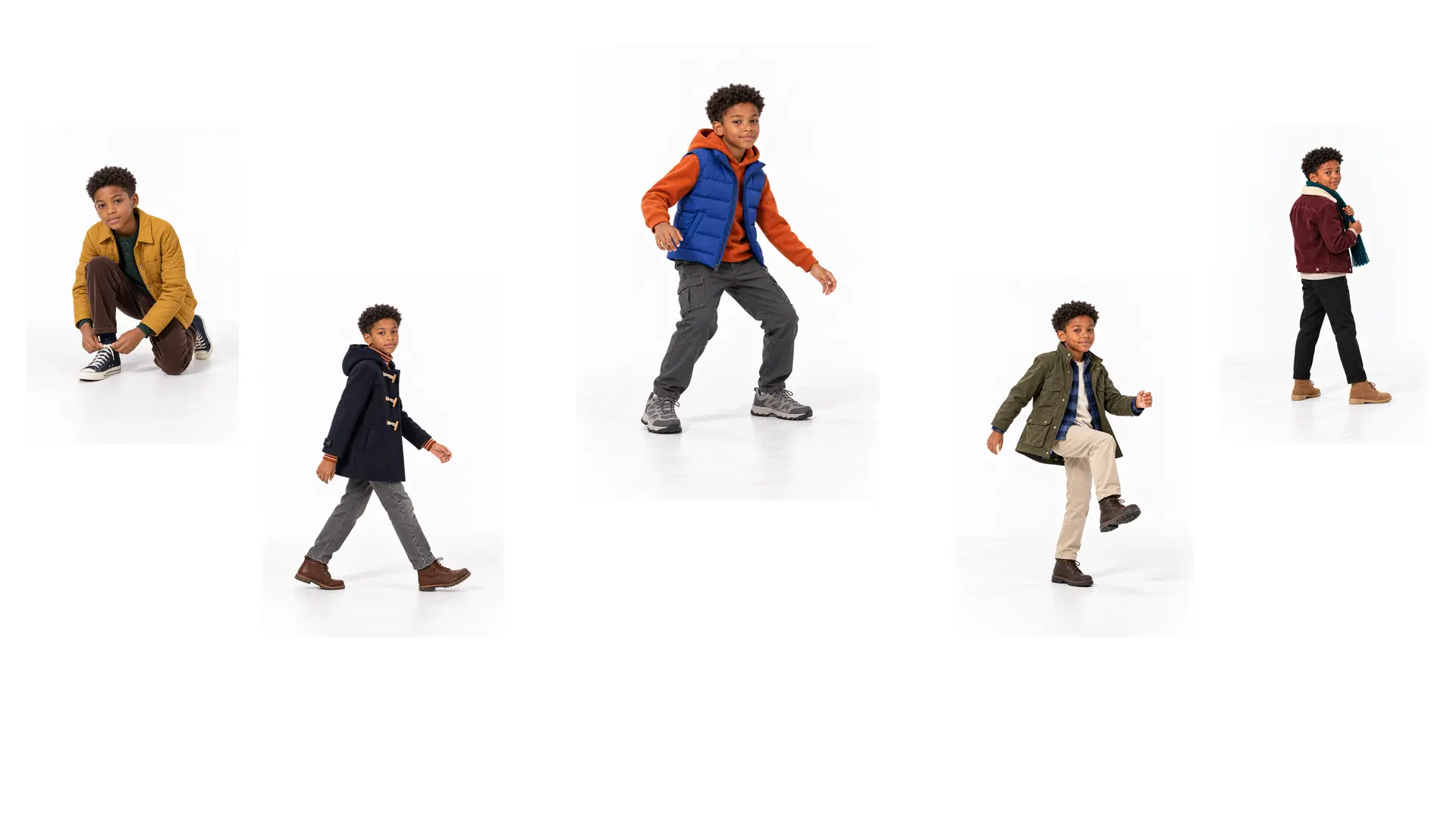
Boys Winter Layering Outfits: Five Practical Looks
Five boys winter layering outfits built with practical removable layers, comfortable fabrics and easy movement for school and weekends.
Read the story
Neutral Capsule Outfits: Five Work-to-Weekend Looks
Five neutral capsule outfits that move from work to weekends with practical layers, comfortable shoes and easy proportions.
Read the story