Teen Capsule Wardrobe: 12 Pieces for School and Weekends
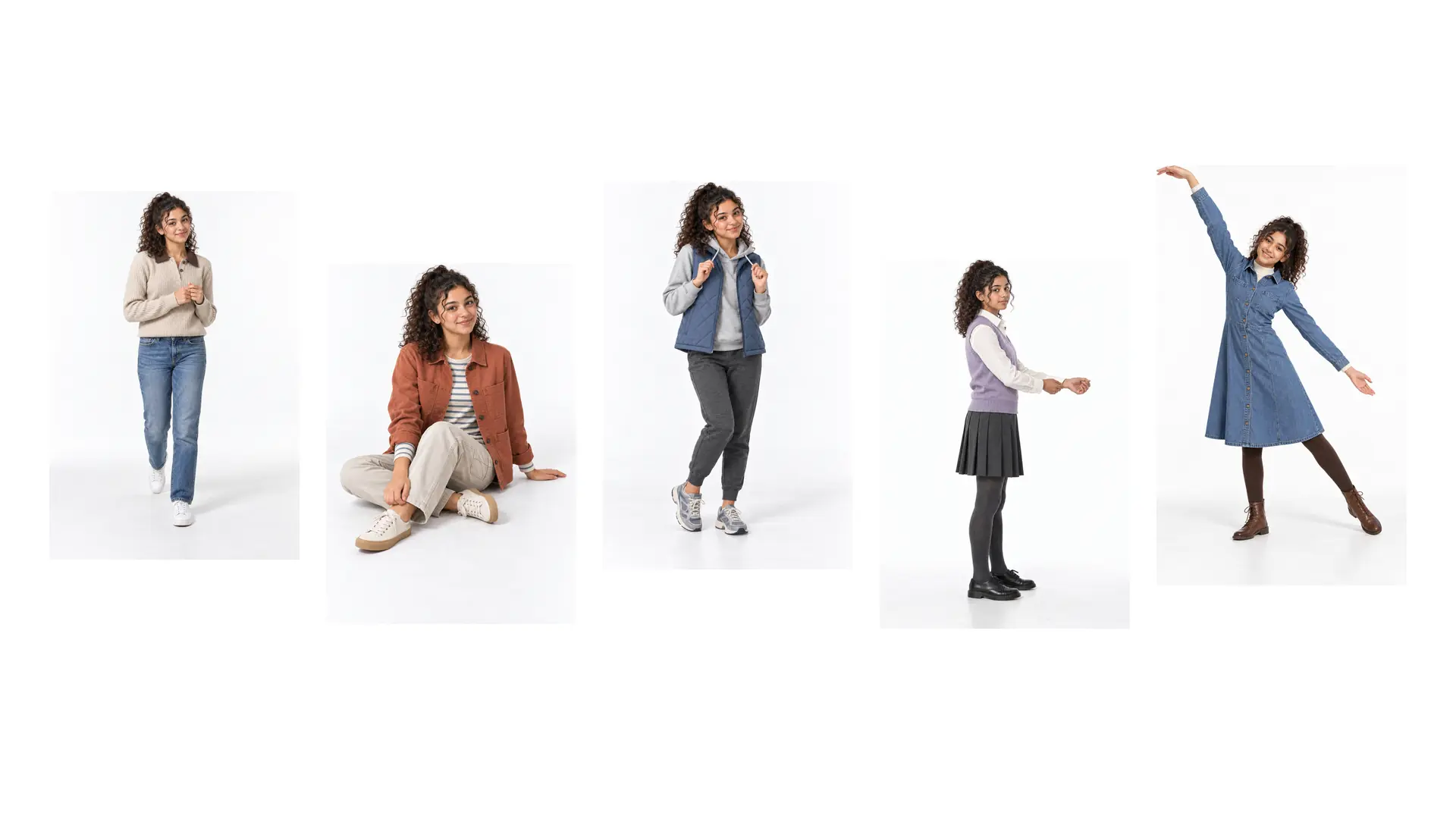
Start a teen capsule wardrobe with 12 useful pieces and five comfortable outfit formulas designed for school days, weekends, and changing weather.
A teen capsule wardrobe should make ordinary mornings easier without turning personal style into a uniform. The most useful version is not a rigid shopping list or an all-beige closet. It is a small group of comfortable clothes that fit the teen’s real week, work together in several combinations, meet school requirements, and leave room for color, texture, and personality. This 12-piece plan uses denim, soft knits, practical layers, and two expressive accents to create five age-appropriate looks for school days, study sessions, family plans, and relaxed weekends.
Start with the Teen’s Actual Week
Before buying anything, map the situations the wardrobe needs to handle. A teen who wears a sports uniform three afternoons a week has different needs from one who attends a stricter school, walks in wet weather, or moves between air-conditioned classrooms and warm afternoons. List the most common settings: regular classes, clubs, travel, casual social plans, family occasions, and at-home time.
Next, review what already fits. Set aside clothes that are uncomfortable, need repair, or no longer suit the wearer. Keep the reliable pieces that appear in repeated outfits. Those repeat items are evidence: they show which rises, sleeve lengths, fabrics, and colors work in real life. A capsule should be built around those habits rather than an imagined aesthetic.
For a growing teen, check fit again before each new season. A slightly relaxed overshirt or adjustable-waist trouser may last longer than a tightly fitted piece, but “room to grow” should never mean dragging hems, slipping shoulders, or unsafe footwear. Comfort, movement, and confidence matter more than a particular silhouette.
The 12-Piece Teen Capsule Wardrobe
This editorial uses 12 garments, with shoes treated as a separate practical category. The palette combines cream, oatmeal, grey, charcoal, cocoa, and mid-wash denim with terracotta, dusty blue, and washed lilac. Because the neutrals repeat, each accent can connect to several outfits.
Oatmeal rib-knit long-sleeve henley
Cream-and-dusty-blue striped T-shirt
Grey cotton-blend hoodie
Cream poplin shirt
Mid-wash straight-leg jeans
Stone utility or carpenter trousers
Charcoal tapered joggers
Charcoal knee-length pleated skirt
Terracotta cotton chore overshirt
Slate-blue lightweight quilted vest
Washed-lilac sweater vest
Dusty-blue denim shirt dress
The list is a framework, not a command to replace an existing closet. If a teen already owns dependable dark jeans, use them. If skirts are not part of their style, substitute straight trousers in the same charcoal base. The capsule works when each item is genuinely wearable and combines with at least two or three others.
Look 1: Rib Knit and Straight-Leg Denim
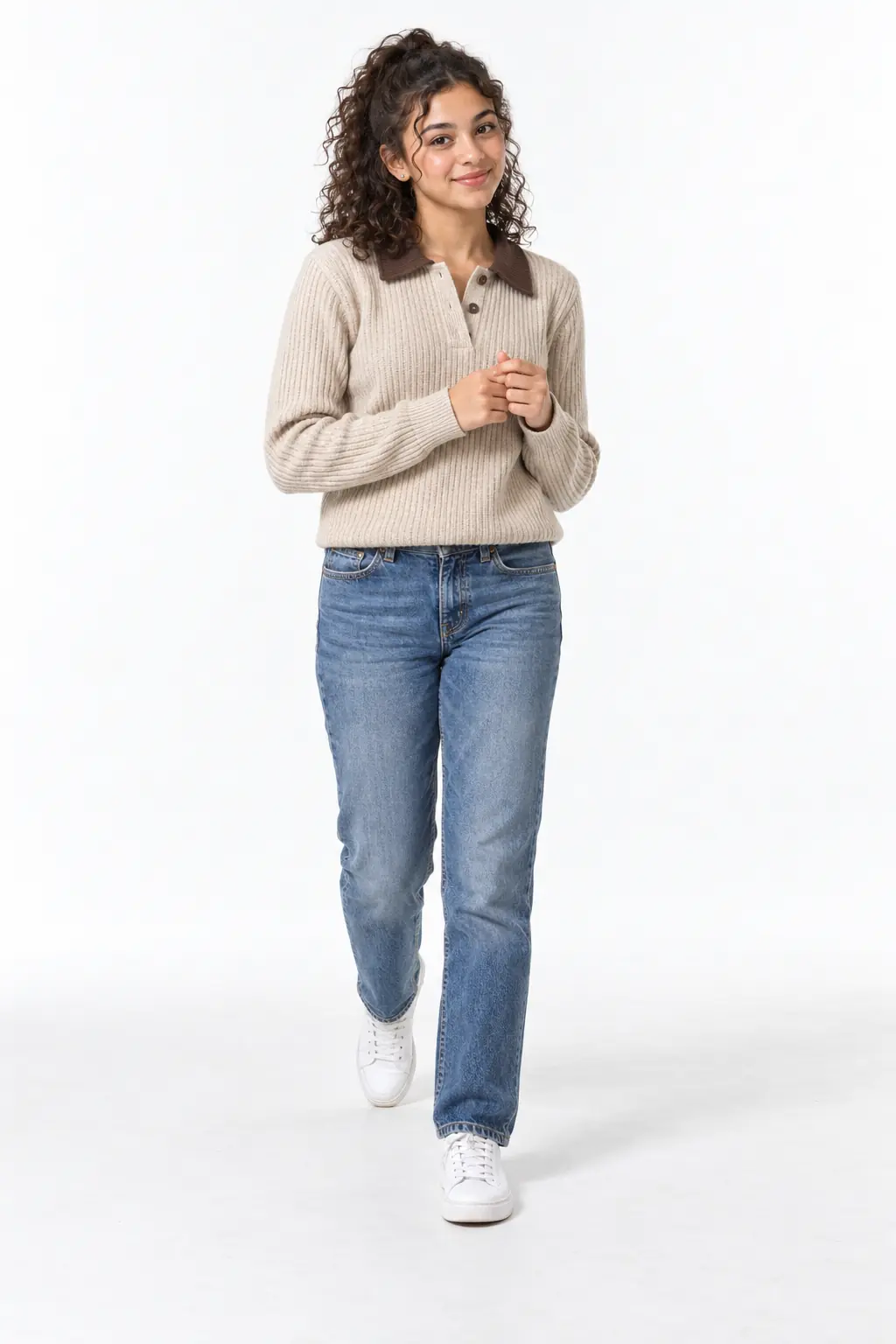
The first look pairs an oatmeal rib-knit henley with mid-wash straight jeans and clean white sneakers. It is the simplest formula in the set, but the rib texture, darker collar, and button placket stop it from feeling unfinished. A straight jean balances comfort with a neat line and works with every layer in the capsule.
This is a dependable school-day outfit for mild weather. On a cooler morning, add the terracotta overshirt or quilted vest. If the dress code requires a more polished appearance, switch the sneakers for black derbies and add the cream poplin shirt beneath the knit, leaving the collar visible. Keep the jean hem clear of the floor so the shoe remains fully functional.
Look 2: Utility Overshirt and Carpenter Trousers
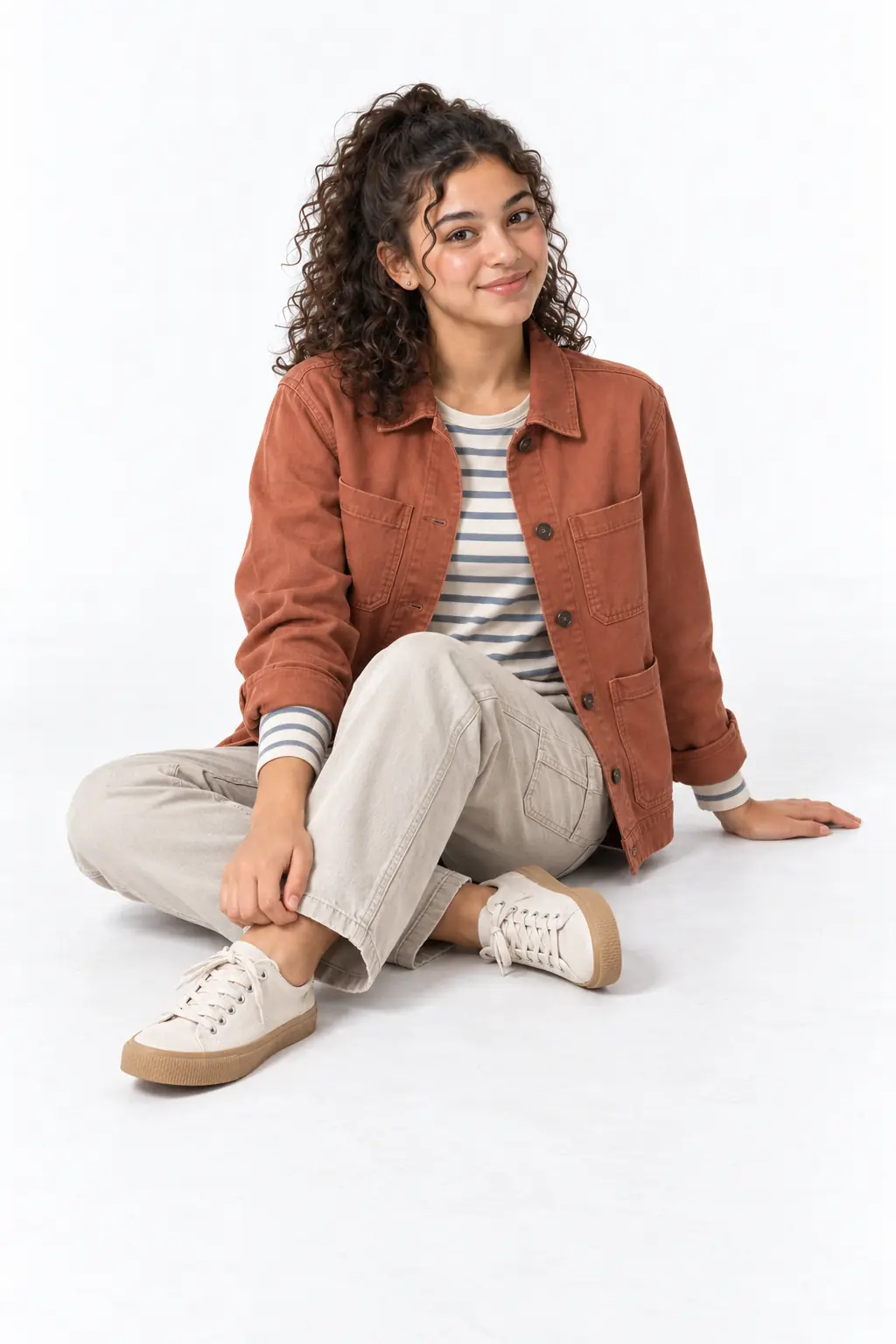
A terracotta chore overshirt, striped tee, and stone carpenter trousers create a practical weekend formula. The outfit uses three different weights: a light jersey base, a sturdier cotton top layer, and structured trousers. That variation gives depth without relying on extra accessories.
Look for an overshirt with functional buttons, secure pockets, and enough shoulder room to layer over a tee. Carpenter trousers should allow sitting, walking, and bending without pulling across the knees or waist. Beige gum-soled trainers keep the palette soft and are easier to repeat with denim, grey, or cocoa pieces. For school, wear the overshirt buttoned halfway; for a casual afternoon, leave it open and roll the cuffs once.
Look 3: Hoodie, Quilted Vest, and Tapered Joggers
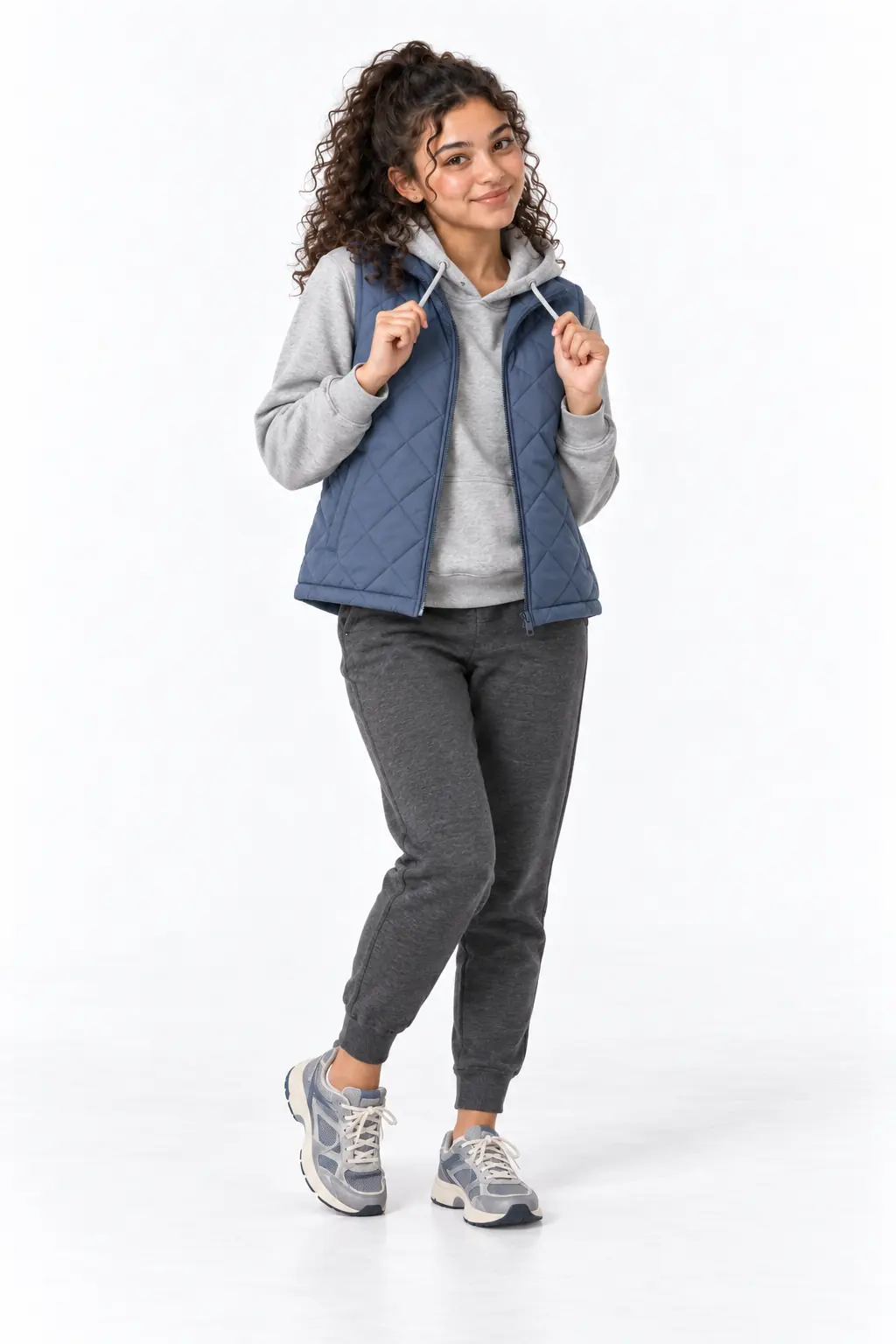
The athleisure look combines a grey hoodie, slate-blue quilted vest, charcoal joggers, and supportive trainers. It is comfortable enough for travel or an active school day, yet the restrained palette and clean taper prevent a pajama-like effect. The vest supplies warmth through the torso while leaving the arms free.
Fit is especially important here. The hoodie should sit smoothly under the vest without bunching at the armholes. Joggers need a secure but non-restrictive waistband and cuffs that stay above the shoe. Choose a vest with a working zipper and even quilting rather than bulky padding. In colder conditions, add a weatherproof coat over the set; in warmer conditions, remove the vest and tie it around a bag instead of the waist if that creates less bulk.
Look 4: Sweater Vest and Pleated Skirt
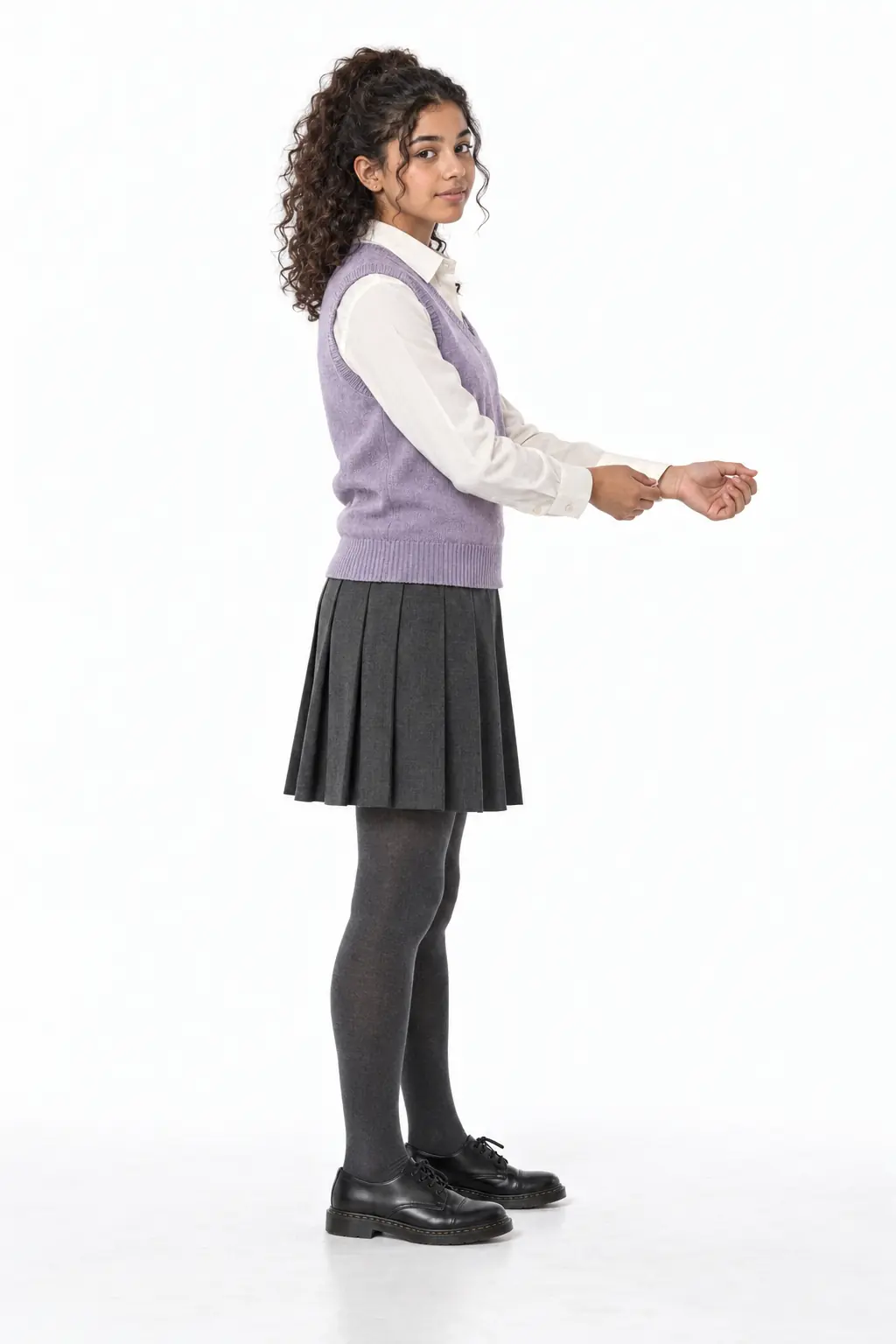
For a more polished school-to-family-plan outfit, layer a washed-lilac sweater vest over a cream poplin shirt and charcoal pleated skirt. Opaque graphite tights and black lace-up derbies make the look practical for cool weather and keep the contrast grounded.
The shirt cuffs and collar should lie flat, and the vest armholes should not pinch or expose large gaps. Choose a skirt length and pleat construction that allow a comfortable stride and comply with the wearer’s school policy. If a skirt is not preferred, the same lilac-and-cream combination works with charcoal straight trousers. The styling idea is the useful part: one accent knit, one crisp base, and one dark lower half.
Look 5: Denim Shirt Dress with Everyday Boots
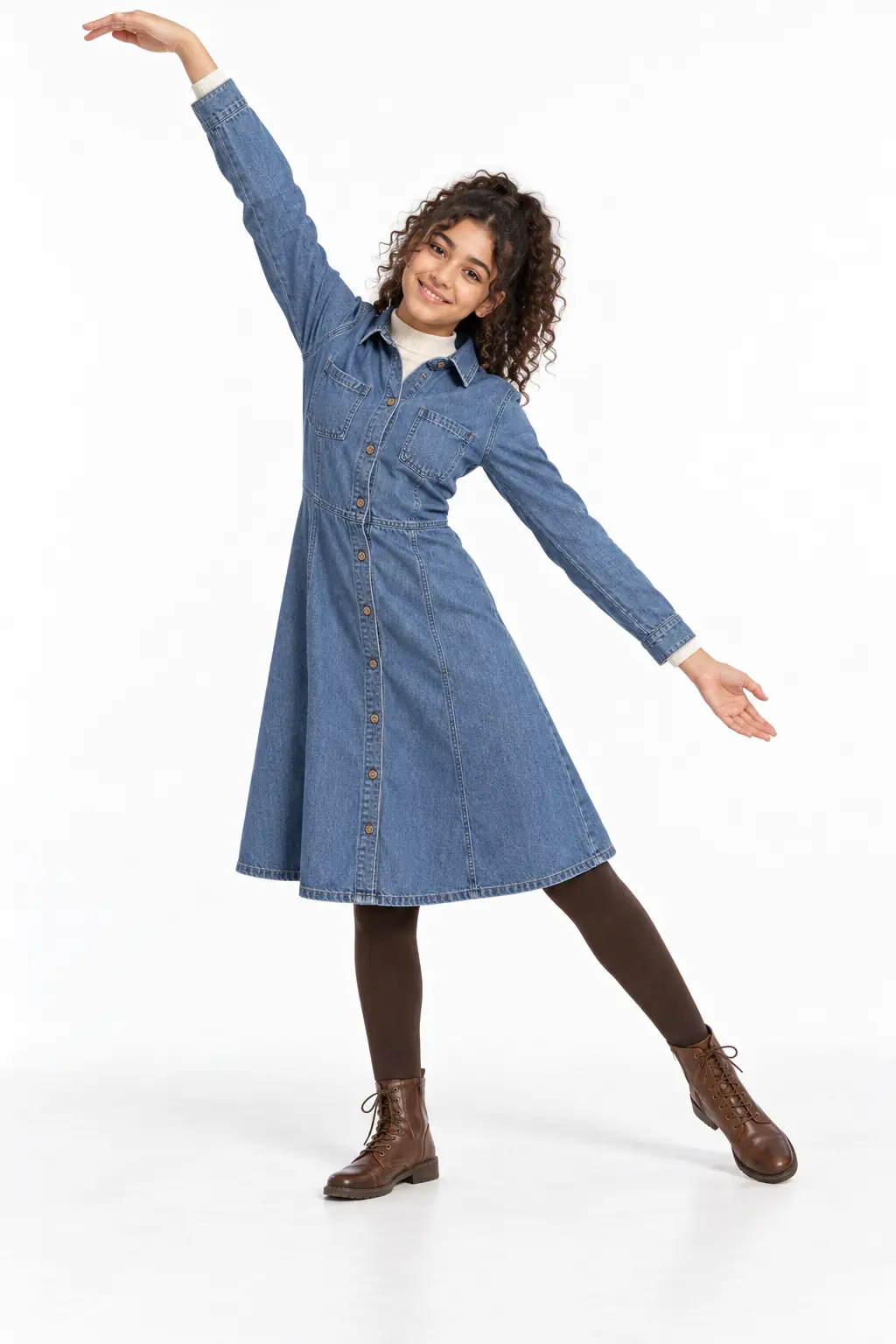
The dusty-blue denim shirt dress is the capsule’s one-piece option. A thin cream mock neck adds warmth at the collar and cuffs, while cocoa opaque leggings and brown lace-up ankle boots make the dress ready for an ordinary day rather than a special event. Visible buttons, chest pockets, and a defined waist seam provide structure without adult occasion styling.
Check that the dress allows a full arm reach and an easy seated position. Midweight denim should hold its shape but still bend at the elbows and waist. In transitional weather, the quilted vest can go over the dress. In colder weather, add a coat and thicker thermal leggings. In warmer weather, remove the underlayer and wear the dress with sneakers, provided the fabric is comfortable against the skin.
Make More Outfits Without Adding More Clothes
The value of a capsule appears in the second and third combinations, not only the five photographed looks. Try the striped tee with straight jeans and the quilted vest. Wear the cream shirt open over the rib-knit top with utility trousers. Pair the hoodie with jeans, or layer the lilac vest over the striped tee for a less formal version. The denim dress can also act as an open long layer over a tee and leggings if its cut and buttons allow it.
A quick outfit test helps before any purchase. Place the possible new item beside at least three existing pieces. If it creates only one convincing outfit, it may be a statement purchase rather than a capsule essential. That is not automatically wrong, but it should be a deliberate choice rather than a gap-filling impulse.
Photograph successful combinations on a phone and keep them in a small album. On rushed mornings, the wearer can choose a saved formula and adjust one layer for the weather. This is more useful than trying to remember every possible combination.
Fabric, Laundry, and Growth Checks
Read care labels before buying. A school wardrobe needs fabrics that suit the household’s actual laundry routine. Cotton tees, washable knits, durable denim, and easy-care trousers are generally simpler to repeat than items requiring constant special treatment. Turn dark denim and printed tees inside out, close zippers, and follow label temperatures. Air-dry knits flat when recommended so shoulders and hems keep their shape.
Inspect stress points: pocket corners, side seams, crotch seams, buttons, zippers, and shoe soles. Good construction does not need decorative complexity, but it should look even and feel secure. Repair a loose button early. Rotate footwear so damp shoes can dry. These small habits extend the useful life of the capsule without pretending any garment will fit forever during a growth period.
Adjust the Capsule for Climate and Dress Codes
In a warm climate, keep the same color system but use breathable poplin, lighter denim, and unlined cotton layers. Replace the quilted vest with a light overshirt and the mock neck with a regular crew-neck tee. In a cold climate, add thermal base layers, a weatherproof coat, warm socks, and boots with suitable traction. Outerwear and climate gear can sit outside the core 12 pieces.
School rules vary, so confirm requirements for skirt length, footwear, logos, hoods, and distressed denim. A practical capsule should reduce conflict with the dress code, not create it. When a rule limits one garment, preserve the outfit’s color and proportion with an allowed substitute.
Teen Capsule Wardrobe Shopping Rules
Start with gaps, not a complete replacement. Set a budget, compare measurements rather than relying only on size labels, and prioritize the pieces worn most often. Ask the teen to move naturally in the fitting room: sit, reach, walk, and bend. Check that collars do not scratch, waistbands do not dig in, and shoes hold the heel securely.
Personality still belongs in a capsule. Washed lilac, terracotta, patterned socks, a favorite pin, or a practical bag can make repeated basics feel individual. The aim is not to remove experimentation. It is to create a dependable base so experimentation becomes easier and fewer purchases end up unworn.
Gallery
Frequently Asked Questions
How many clothes should a teen capsule wardrobe include?+
Can a capsule wardrobe include bright colors?+
What if a teenager is still growing quickly?+
How should parents and teens plan the capsule together?+
Does every item need to match every other item?+
Share this post
Related Posts
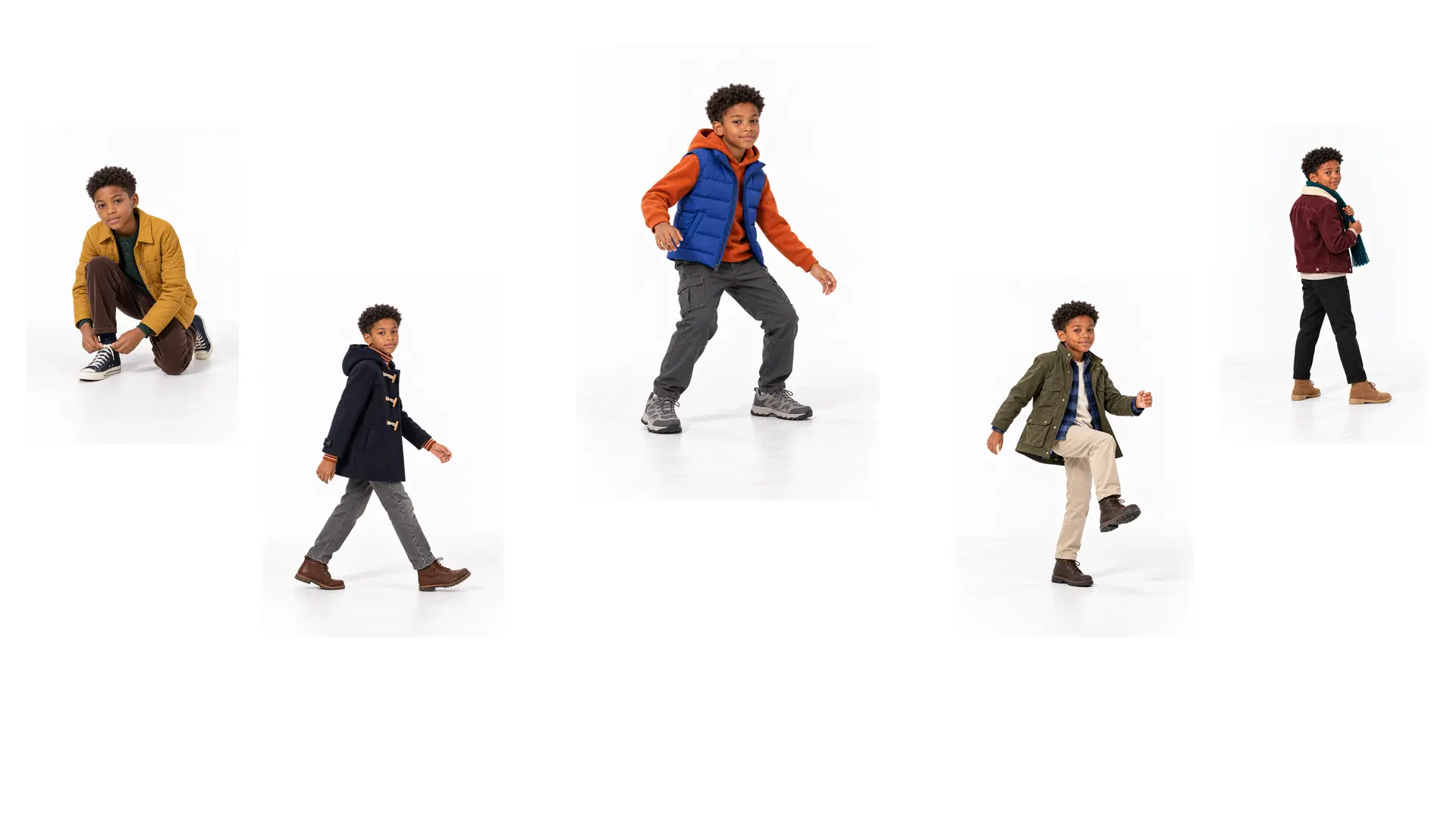
Boys Winter Layering Outfits: Five Practical Looks
Five boys winter layering outfits built with practical removable layers, comfortable fabrics and easy movement for school and weekends.
Read the story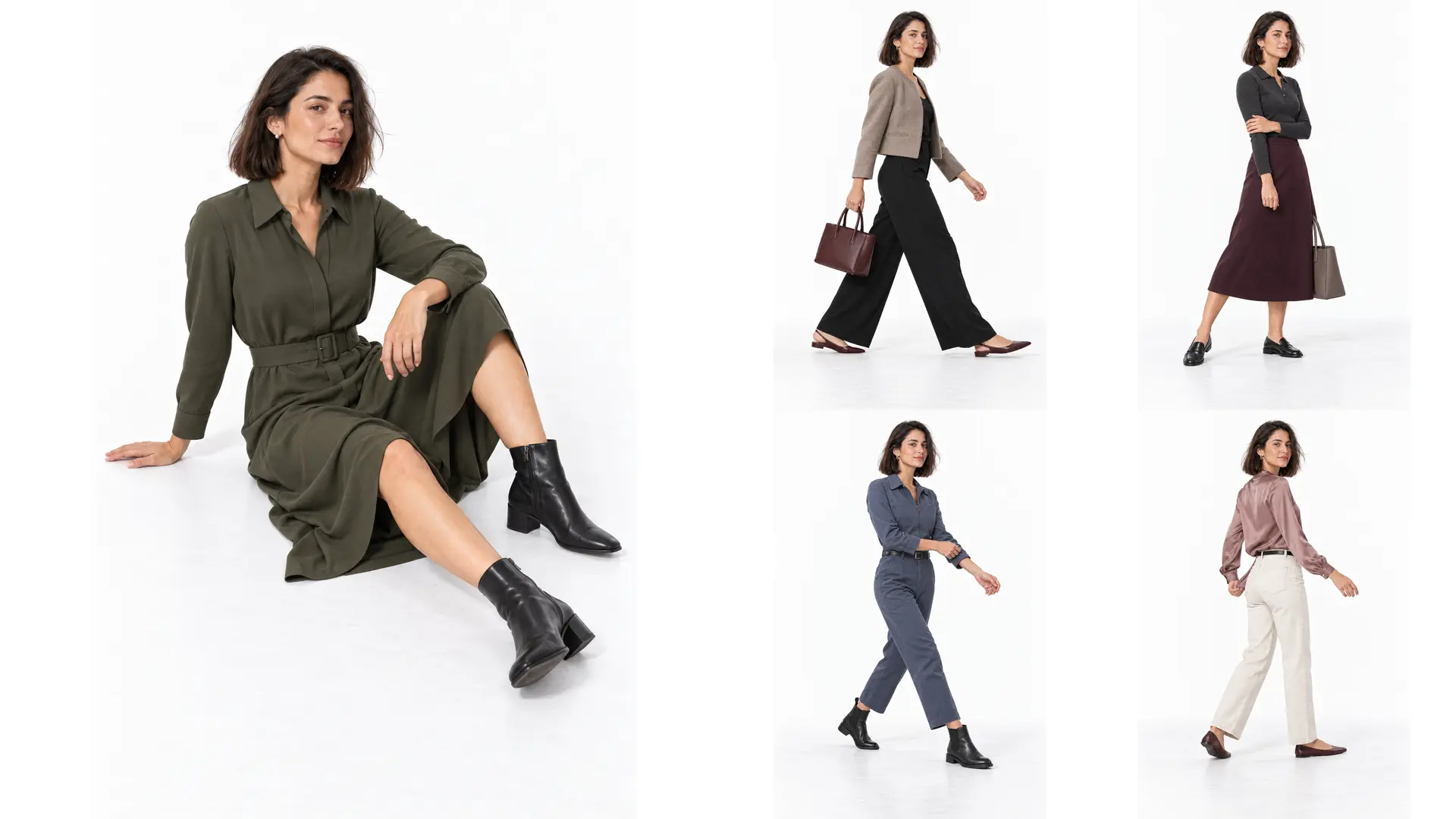
Neutral Capsule Outfits: Five Work-to-Weekend Looks
Five neutral capsule outfits that move from work to weekends with practical layers, comfortable shoes and easy proportions.
Read the story
Unisex Teen Outfits: 5 Practical Fall Layering Ideas
Five unisex teen outfits built with comfortable fall layers, practical trousers and school-to-weekend shoes for repeatable everyday styling.
Read the story