5 Comfortable Travel Capsule Outfits That Still Look Polished
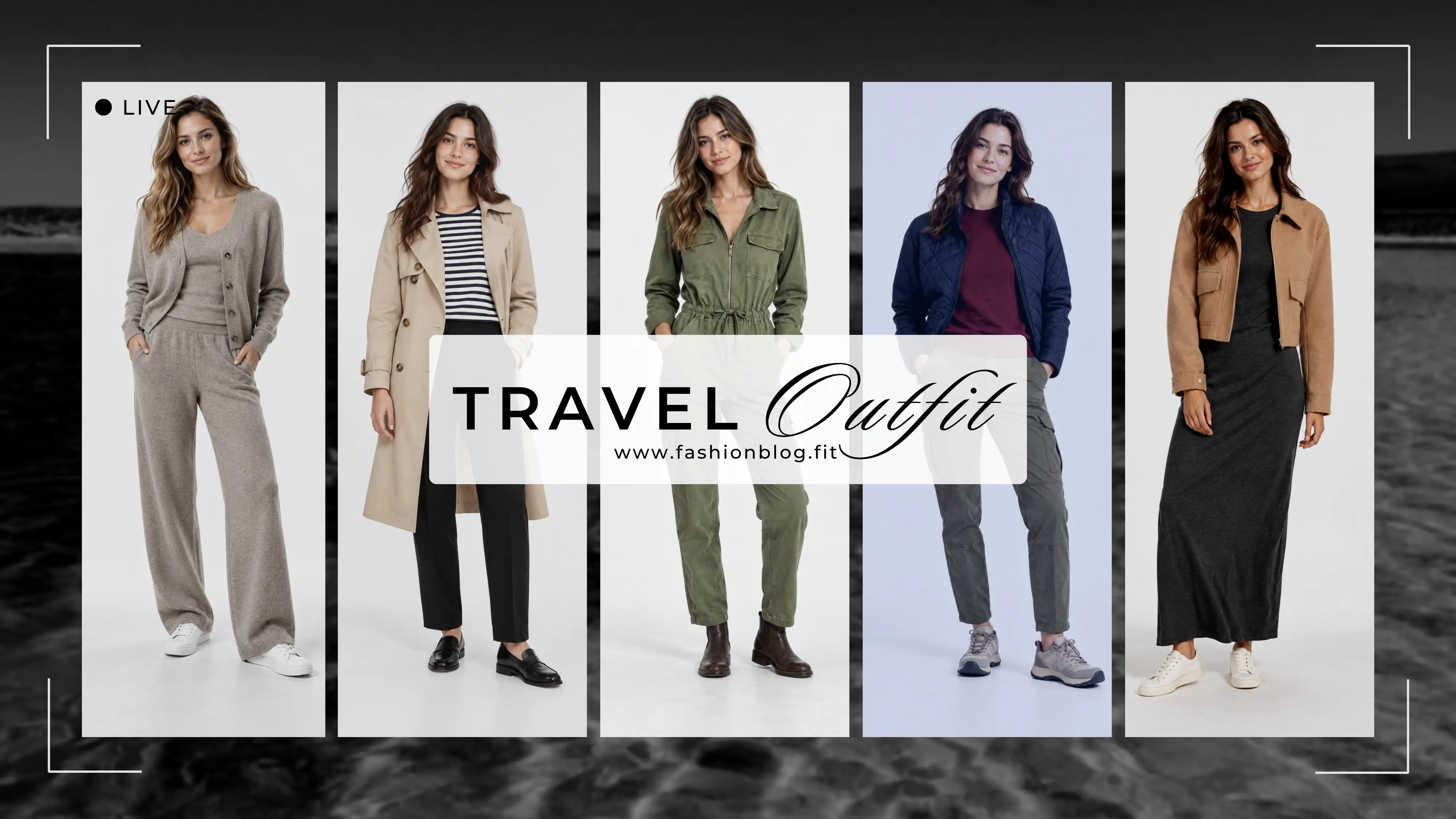
Explore five travel capsule formulas with practical guidance on proportion, footwear, color, layering and seasonal adaptation. Each look is photographed on a consistent white background and can be recreated with equivalent wardrobe pieces.
5 Comfortable Travel Capsule Outfits That Still Look Polished
This guide will help you choose and recreate five travel capsule formulas, understand why their proportions work, and adapt them to different plans, temperatures and comfort needs. A useful travel capsule must handle sitting, walking, changing temperatures and repeated wear. These looks prioritize forgiving construction, simple layering and shoes that make sense beyond the airport.
The photographs use a consistent white studio so the clothing construction, hem length, footwear and color relationships are easy to compare. Treat each look as a formula rather than a shopping list: use equivalent pieces already in your wardrobe, check fit and fabric in natural light, and adjust coverage or footwear to your setting.
The Core Styling Approach
Pack pieces that resist obvious creasing, share a restrained palette and work with the same outer layer. Keep heavy footwear to one or two pairs and make every base outfit complete enough to wear after removing a jacket. Before leaving home, view the outfit from the front, side and back. Sit, walk and raise your arms to confirm that the clothing still hangs correctly. A good outfit should remain comfortable and coherent in motion, not only in a mirror pose.
The knit set is ideal for transit, the utility jumpsuit simplifies dressing, the trench formula suits cities, the jersey dress moves from day to dinner, and the quilted-jacket look handles active or cooler itineraries.
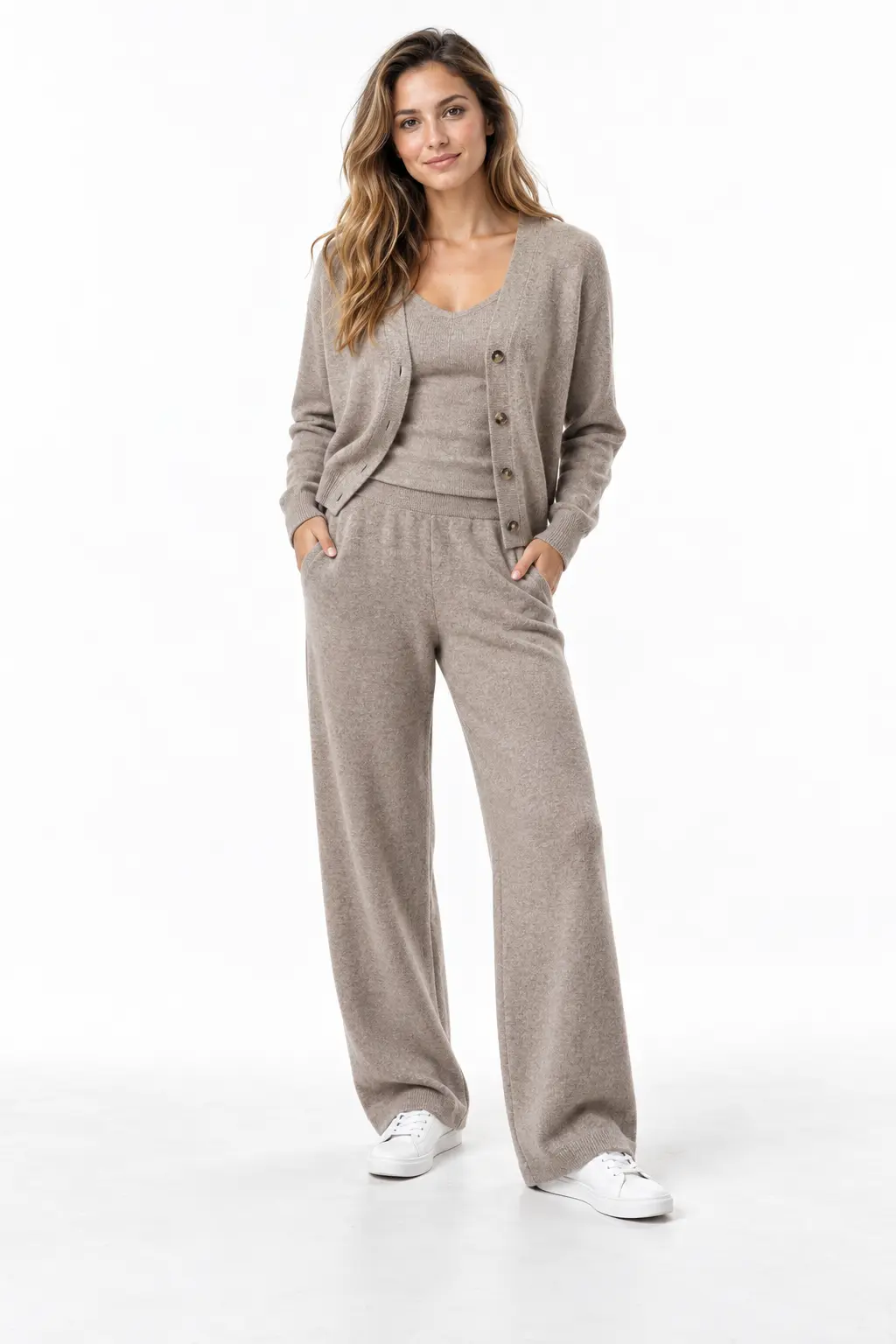
Look 1 Taupe Knit Travel Set
Outfit formula: taupe cardigan; matching shell and wide knit trousers; white sneakers.
A coordinated knit set looks intentional while allowing movement during long travel days. Separate layers also create several mix-and-match options. This formula works because every piece has a distinct role: one establishes the silhouette, one controls contrast or texture, and the footwear completes the visual weight at the hem. Recreate it by matching the relationship between the pieces rather than chasing an exact product. If your version has more volume, define the waist or expose a narrower layer; if it is more fitted, add movement through the outer layer or bottom.
Wear it for flight, train, hotel arrival. For a quieter result, reduce jewelry and keep the shoe close to the darkest garment color. For more personality, introduce one small accent through earrings, a belt or a bag, but avoid adding several unrelated focal points.
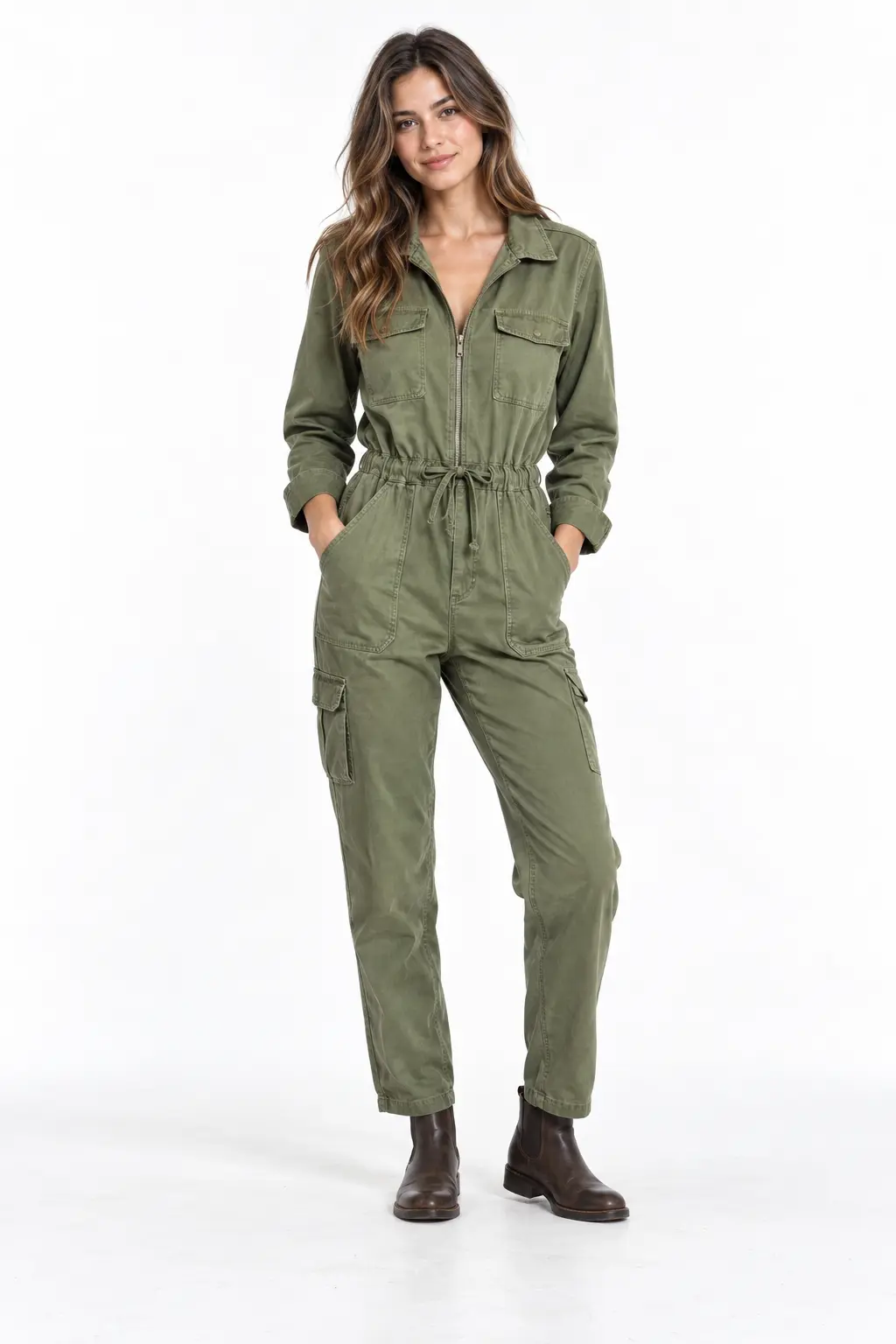
Look 2 Sage Utility Jumpsuit
Outfit formula: sage utility jumpsuit; brown flat boots.
A single garment reduces packing decisions and the adjustable waist keeps the shape flexible. Flat boots add durability for active days. This formula works because every piece has a distinct role: one establishes the silhouette, one controls contrast or texture, and the footwear completes the visual weight at the hem. Recreate it by matching the relationship between the pieces rather than chasing an exact product. If your version has more volume, define the waist or expose a narrower layer; if it is more fitted, add movement through the outer layer or bottom.
Wear it for city exploring, road trip, casual dinner. For a quieter result, reduce jewelry and keep the shoe close to the darkest garment color. For more personality, introduce one small accent through earrings, a belt or a bag, but avoid adding several unrelated focal points.
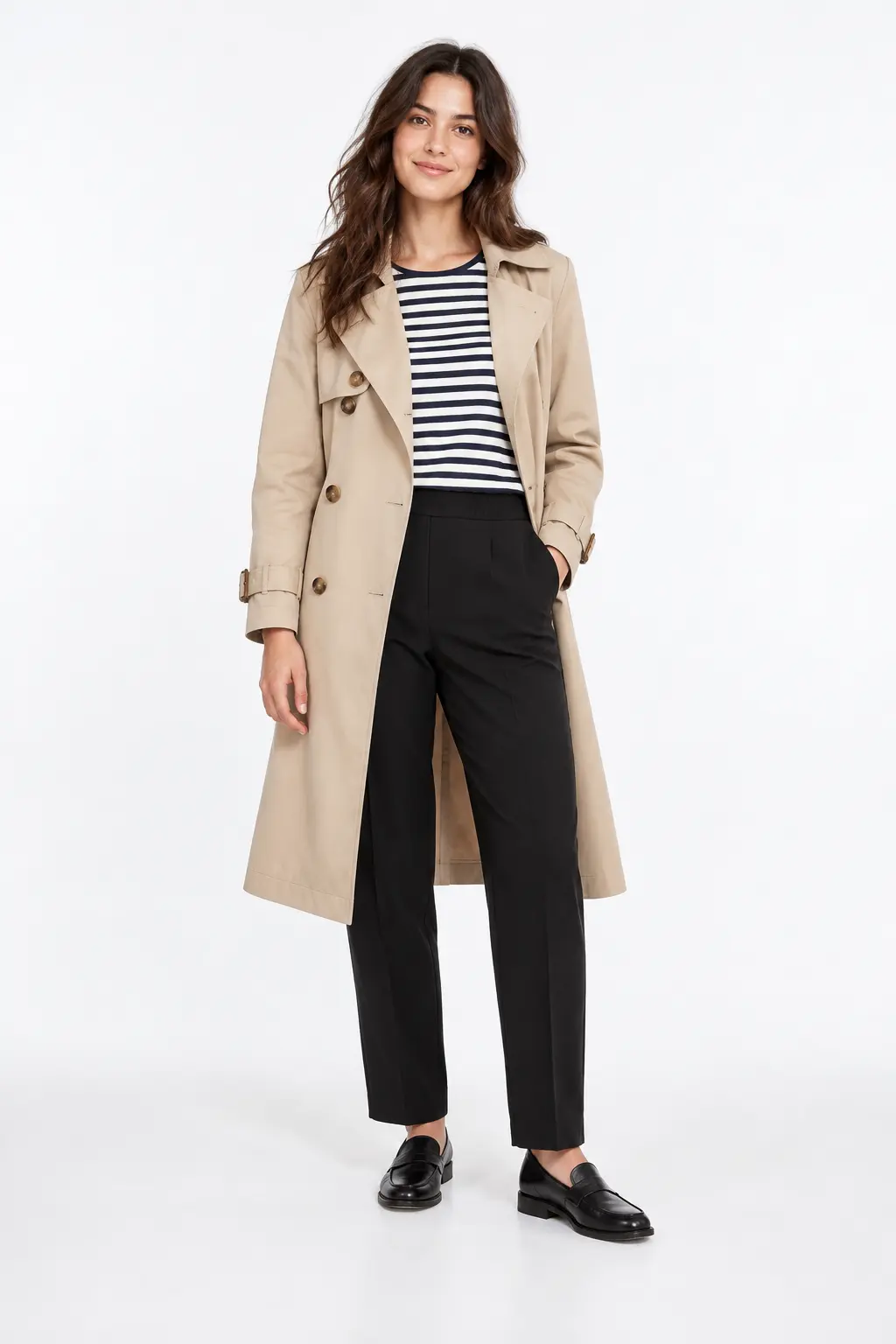
Look 3 Sand Trench and Pull-On Trousers
Outfit formula: sand trench; striped tee; black pull-on trousers; black loafers.
The trench adds polish to an easy base while the striped tee brings definition. Pull-on trousers support comfort without looking like lounge wear. This formula works because every piece has a distinct role: one establishes the silhouette, one controls contrast or texture, and the footwear completes the visual weight at the hem. Recreate it by matching the relationship between the pieces rather than chasing an exact product. If your version has more volume, define the waist or expose a narrower layer; if it is more fitted, add movement through the outer layer or bottom.
Wear it for airport, museum day, cafe stop. For a quieter result, reduce jewelry and keep the shoe close to the darkest garment color. For more personality, introduce one small accent through earrings, a belt or a bag, but avoid adding several unrelated focal points.
Look 4 Jersey Maxi Dress and Cropped Jacket
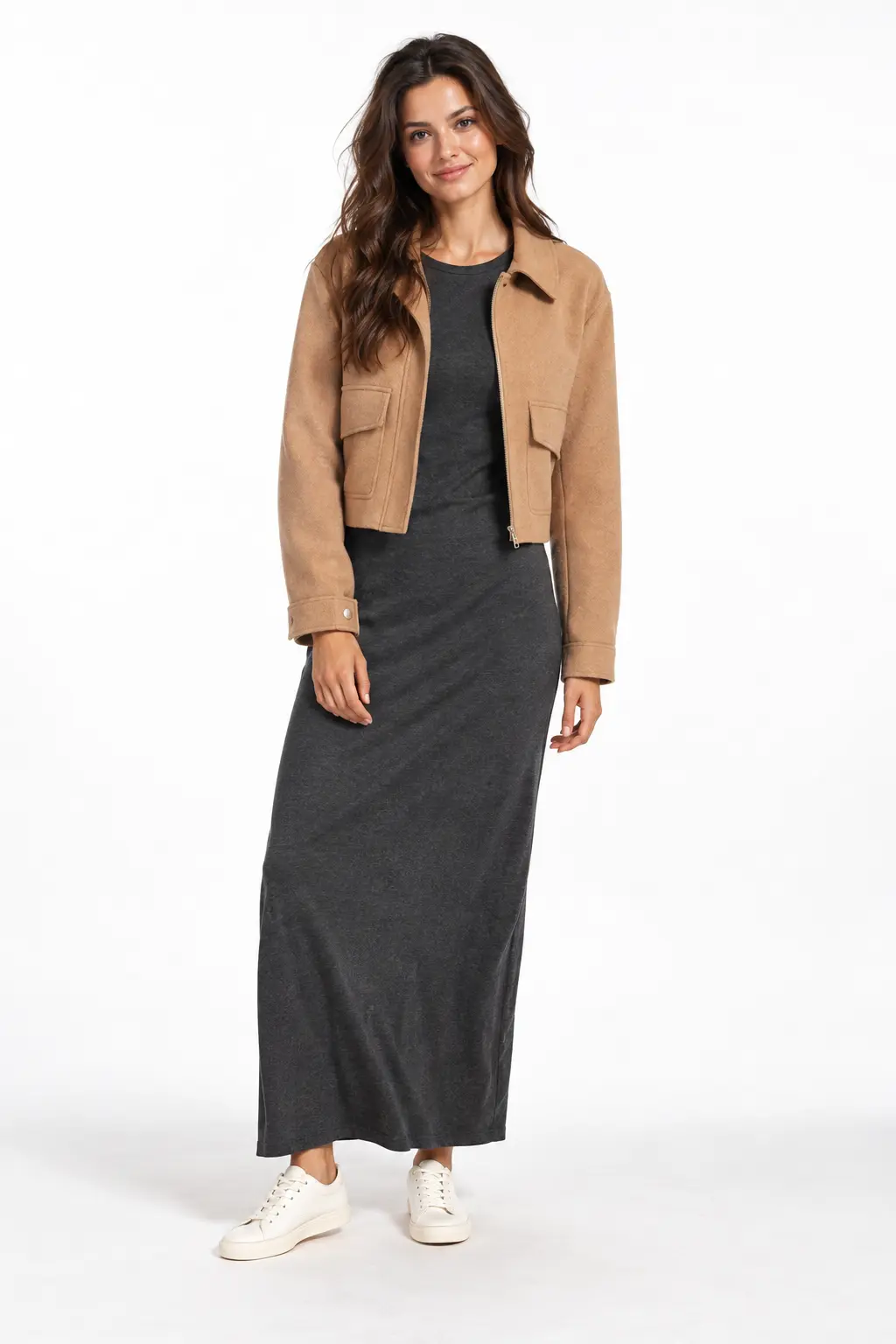
Outfit formula: charcoal jersey maxi dress; cropped camel jacket; white sneakers.
The dress creates a long, simple base and the short jacket restores proportion. Sneakers keep it useful for walking. This formula works because every piece has a distinct role: one establishes the silhouette, one controls contrast or texture, and the footwear completes the visual weight at the hem. Recreate it by matching the relationship between the pieces rather than chasing an exact product. If your version has more volume, define the waist or expose a narrower layer; if it is more fitted, add movement through the outer layer or bottom.
Wear it for sightseeing, lunch, informal dinner. For a quieter result, reduce jewelry and keep the shoe close to the darkest garment color. For more personality, introduce one small accent through earrings, a belt or a bag, but avoid adding several unrelated focal points.
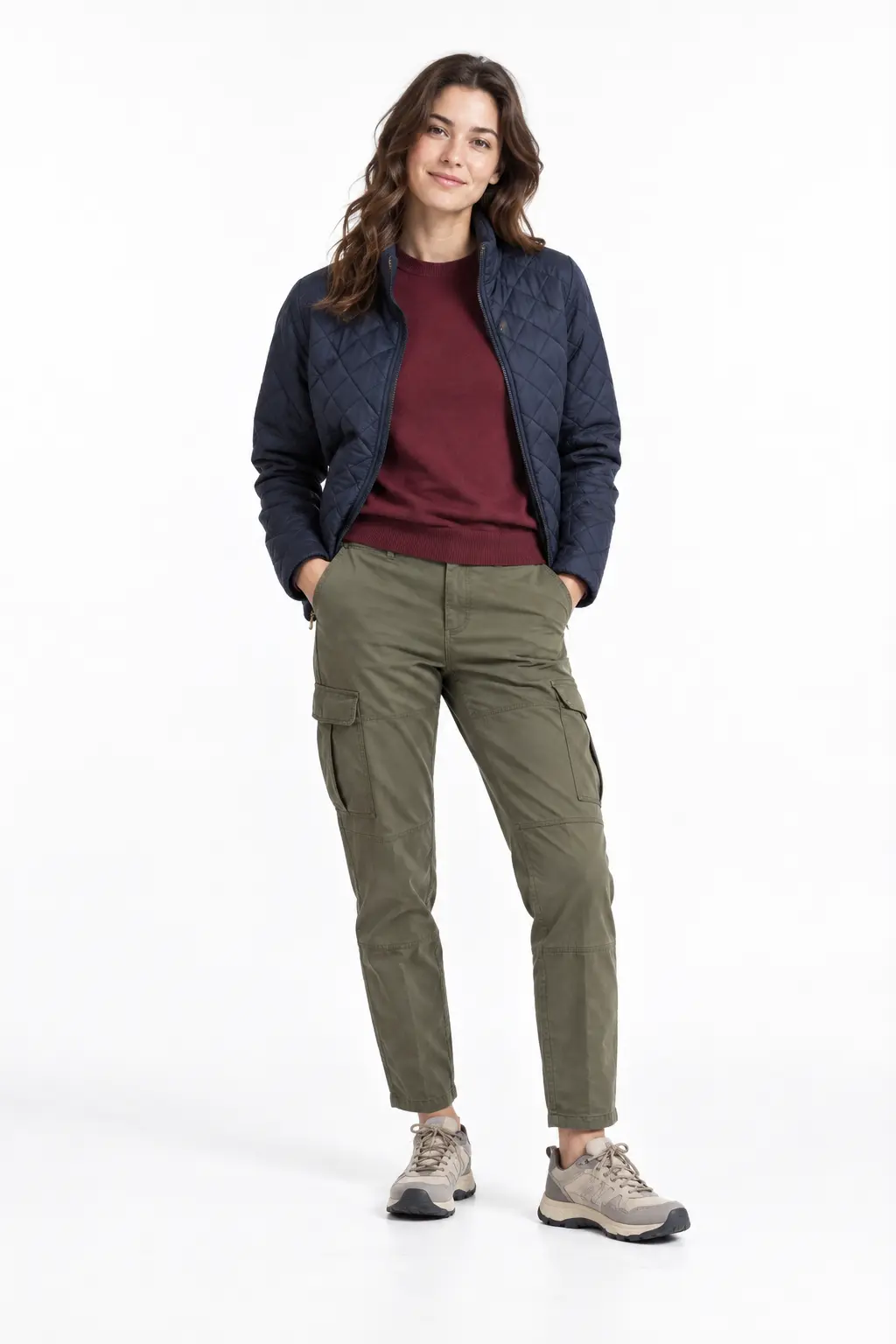
Look 5 Quilted Jacket and Cargo Trousers
Outfit formula: navy quilted jacket; burgundy merino top; olive cargo trousers; neutral trail sneakers.
Light insulation and practical trousers suit variable outdoor plans. Burgundy adds color while remaining compatible with navy and olive. This formula works because every piece has a distinct role: one establishes the silhouette, one controls contrast or texture, and the footwear completes the visual weight at the hem. Recreate it by matching the relationship between the pieces rather than chasing an exact product. If your version has more volume, define the waist or expose a narrower layer; if it is more fitted, add movement through the outer layer or bottom.
Wear it for cool-weather excursion, travel day, countryside. For a quieter result, reduce jewelry and keep the shoe close to the darkest garment color. For more personality, introduce one small accent through earrings, a belt or a bag, but avoid adding several unrelated focal points.
How to Choose the Right Formula
Begin with context. Consider how formal the destination is, how long you will walk or sit, and whether the temperature will change. Then choose the look whose strongest garment already answers that need. A dress or jumpsuit reduces coordination decisions; separates provide more temperature control and future combinations. Tailoring increases formality, while knitwear, denim and flat shoes usually make an outfit more relaxed.
Fit matters more than the label on the size tag. Shoulder seams, waist placement, sleeve length and trouser break should support the intended silhouette. If a hem catches under a heel, a jacket pulls when buttoned or a skirt twists while walking, adjust the size, alteration or shoe before adding accessories.
Color Footwear and Accessories
Build from two dominant colors and, if useful, one small accent. Repeating a color near the top and bottom can make a look feel connected, but exact matching is not required. Related shades often look richer because they reveal texture. Smooth leather and pointed footwear usually read more polished; loafers, flat boots and low-profile sneakers support longer walking days.
Accessories should solve a styling need. A belt may restore proportion, earrings can bring light near the face, and a structured bag can raise the formality of soft clothing. Avoid accessories that interfere with garment details such as a statement neckline, visible buttons or an already textured fabric.
Seasonal Adaptation
For warm destinations, replace merino and quilted layers with cotton or linen blends. For cold trips, add thin thermals and a larger scarf instead of packing several bulky sweaters. Always adapt footwear to distance, terrain and forecast. The goal is to preserve the original proportion while changing insulation. Thin layers are usually easier than forcing a heavy knit beneath a fitted jacket. When adding tights, socks or boots, check how the new color changes the lower half of the outfit.
Make the Looks More Versatile
Photograph successful combinations and note which shoes and outerwear worked. This creates a personal reference that speeds up future dressing. When adding a new item, test it with at least three existing pieces before deciding that it fills a real gap. The most useful wardrobe is not the largest one; it is the one with clear combinations for the situations you actually encounter.
Gallery