Girls Winter School Outfits: Five Practical Layers
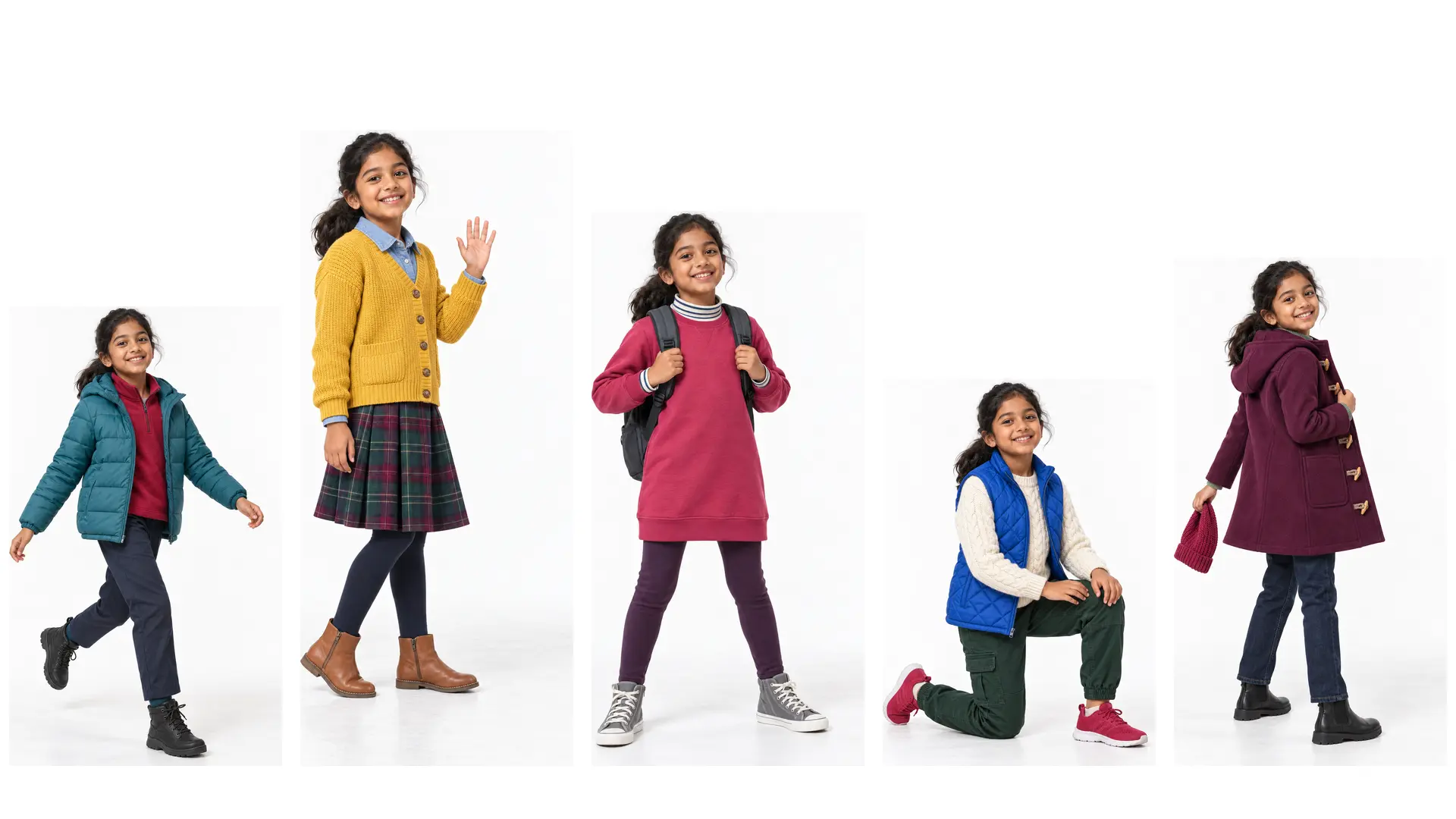
Five girls winter school outfits with removable layers, practical footwear and comfortable formulas for classrooms, commutes and outdoor breaks.
Girls winter school outfits work best when the child can move, sit, play and adjust to a warm classroom without needing a completely different outfit. That makes removable layers more useful than one heavy indoor look. The five formulas below are designed for girls around ages 9–12, with secure footwear, uncomplicated fastenings and enough variety for ordinary school days.
The aim is not to make a child look older. Good school styling at this age should still feel energetic, comfortable and easy to manage. A puffer and practical trousers solve a wet commute. A cardigan and skirt offer a more polished option. A sweatshirt dress, quilted vest and duffle coat provide different levels of warmth without relying on the same silhouette every day.
Why Girls Winter School Outfits Need Flexible Layers
A school day can include a cold walk, a heated classroom, outdoor break time and an after-school journey. One fixed level of insulation rarely suits every part of that schedule. A better approach starts with an indoor outfit that remains comfortable for lessons, then adds a layer that can be opened, removed or stored.
For mild winter conditions, that removable piece might be a cardigan or quilted vest. Colder or wetter weather may call for a puffer or longer coat. The local forecast, wind, rain or snow matter more than a generic seasonal label. School rules matter too: check skirt length, footwear requirements, hood policies and whether outdoor coats must be stored during class.
Children should be able to manage the closures themselves. Large zipper pulls, straightforward buttons, visible toggles and backpacks with adjustable straps are more useful than decorative fastenings that slow down the morning routine.
Look 1: Teal Puffer with Fleece and Straight Trousers
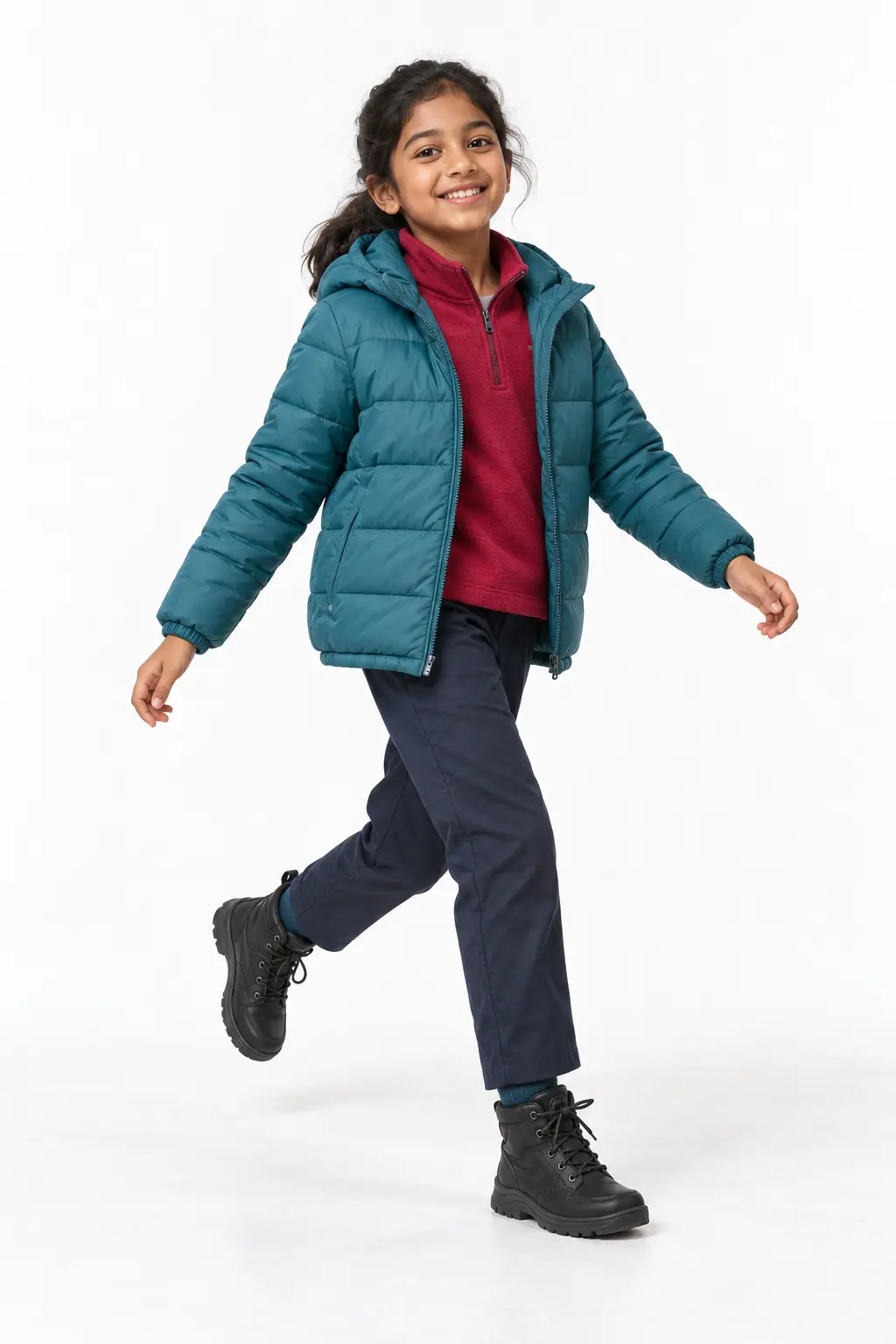
The first outfit uses a teal water-resistant puffer as the main weather layer. Under it, a berry fleece half-zip adds warmth without the bulk of a second coat. Ink-navy straight trousers keep the lower half practical, while black waterproof lace-up boots provide better coverage for damp paths and cold playground surfaces.
This formula works because every garment has a separate job. The fleece can remain on in a cool classroom, while the puffer can be hung up. Straight trousers give enough room for movement without excess fabric at the ankle. The bright teal outer layer also makes the outfit easier to see on grey winter mornings.
Check that the puffer still allows free shoulder movement when the fleece is underneath. A coat that fits only over a thin T-shirt may become restrictive once winter layers are added. Boots should also be tried with the actual socks intended for school so the toes are not compressed.
Look 2: Mustard Cardigan with Plaid Skirt and Leggings
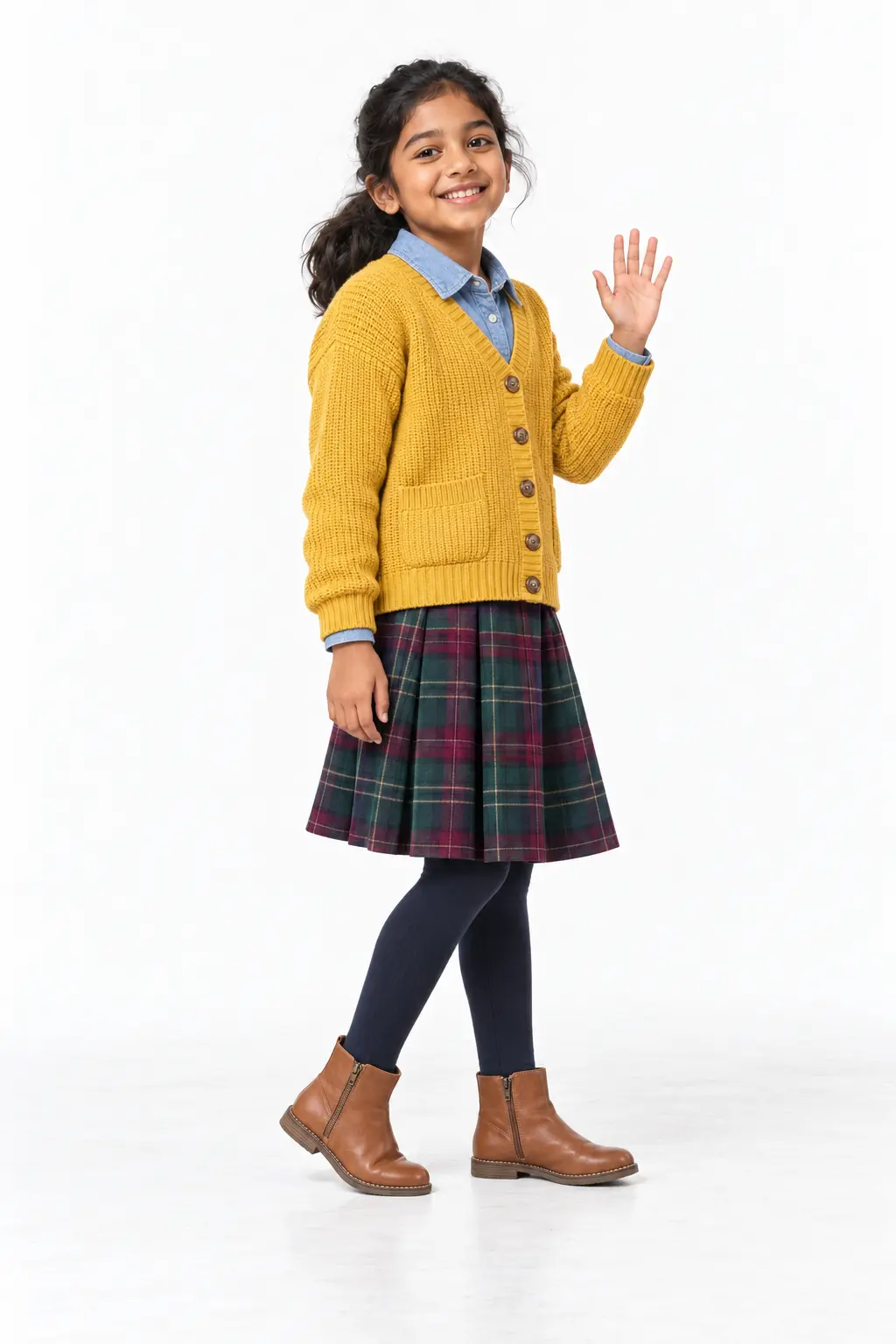
A mustard cardigan, chambray shirt and forest-and-berry plaid skirt create a polished school outfit without turning it into formal occasionwear. Opaque navy leggings supply coverage and warmth, and tan ankle boots give the look a sturdy everyday finish.
The front-opening cardigan is the most useful piece here. It can be buttoned during the morning commute, worn open during lessons or removed without disturbing the collared shirt. Chunky knit adds visual interest, but the cuffs and hem should stay close enough to the body that they do not catch on desks, bags or playground equipment.
For cold weather, leggings should be selected by fabric weight rather than opacity alone. A thin fashion legging may look covered but provide little insulation. If the school building runs warm, choose a breathable midweight pair instead of combining several bulky layers.
The plaid skirt already carries pattern, so the remaining pieces are deliberately simple. This keeps the outfit easy to repeat with a different cardigan, plain skirt or stretch trousers later in the week.
Look 3: Sweatshirt Dress with Thermal Leggings
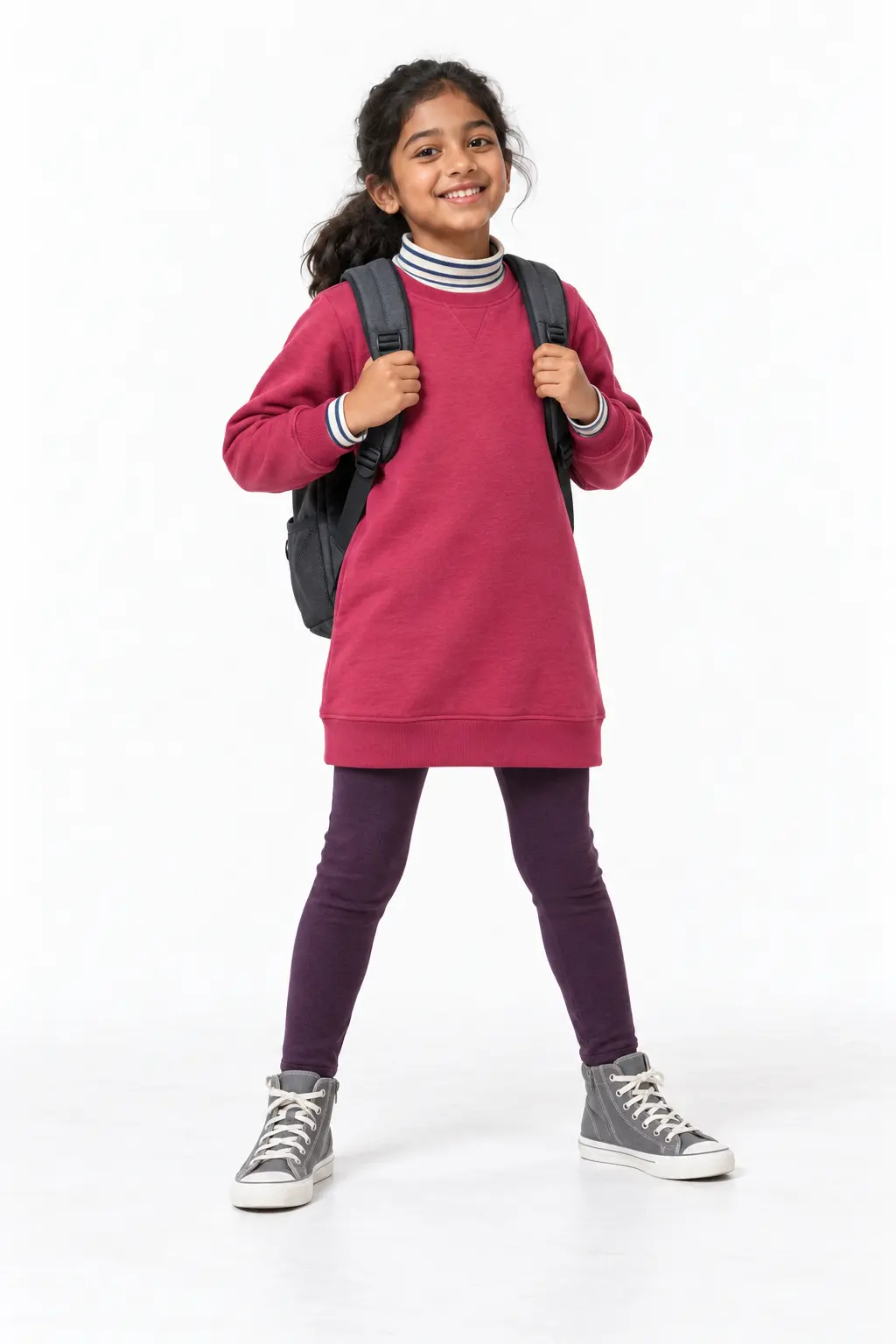
The dusty-raspberry sweatshirt dress is the easiest indoor outfit in the set. It sits over a striped cotton turtleneck and deep-plum thermal leggings, creating three light layers across the torso without a stiff or complicated construction. Grey high-top sneakers and a charcoal backpack keep the result casual and classroom-ready.
A sweatshirt dress should leave enough room through the shoulders and seat for sitting, climbing stairs and outdoor play. The hem needs to remain secure when the child reaches, bends or wears a backpack. Ribbed cuffs and a stable neckline help the garment hold its shape through an active day.
The backpack is part of the fit check, not only an accessory. Padded straps should sit on both shoulders and adjust so the bag rests close to the back. When the dress fabric bunches heavily beneath the straps, either the backpack is too loose or the upper layer is too bulky.
This look can adapt to colder weather with a separate coat and weatherproof boots. Avoid treating the sweatshirt dress itself as sufficient outerwear simply because the fabric feels substantial indoors.
Look 4: Quilted Vest with Cable Knit and Cargo Joggers
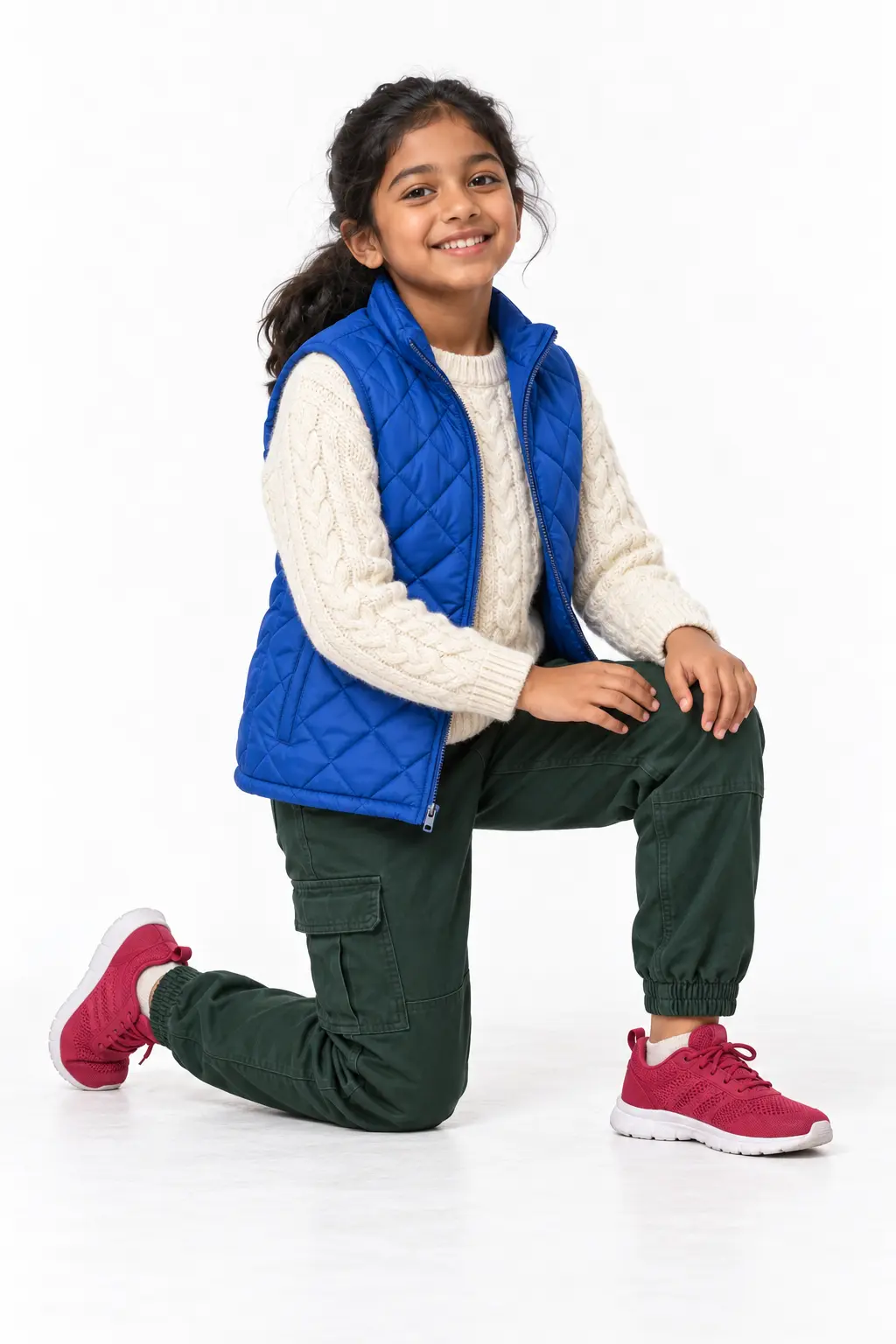
A cobalt quilted vest creates core warmth while leaving the arms free. The cream cable-knit sweater supplies a soft mid-layer, forest cargo joggers add durable pockets and raspberry trainers bring a bright accent. The combination is useful for active school days when a full coat would feel too warm indoors.
The vest should close comfortably over the sweater without pulling across the chest or armholes. If the armholes rub or lift the sweater sleeves, the vest is too narrow for that layer. Diamond quilting should remain flat and evenly distributed rather than creating large gaps where insulation can shift.
Cargo joggers work best when the pockets are shallow and securely closed. Oversized side pockets can become uncomfortable against a classroom chair or fill with objects that distort the knees. A tapered cuff also helps keep the trouser hem away from wet ground.
For the commute, this vest-and-knit combination may still need a rain shell or winter coat depending on temperature and wind. It is a flexible mid-layer formula, not a substitute for weather protection in severe conditions.
Look 5: Plum Duffle Coat with Sage Knit and Dark Denim
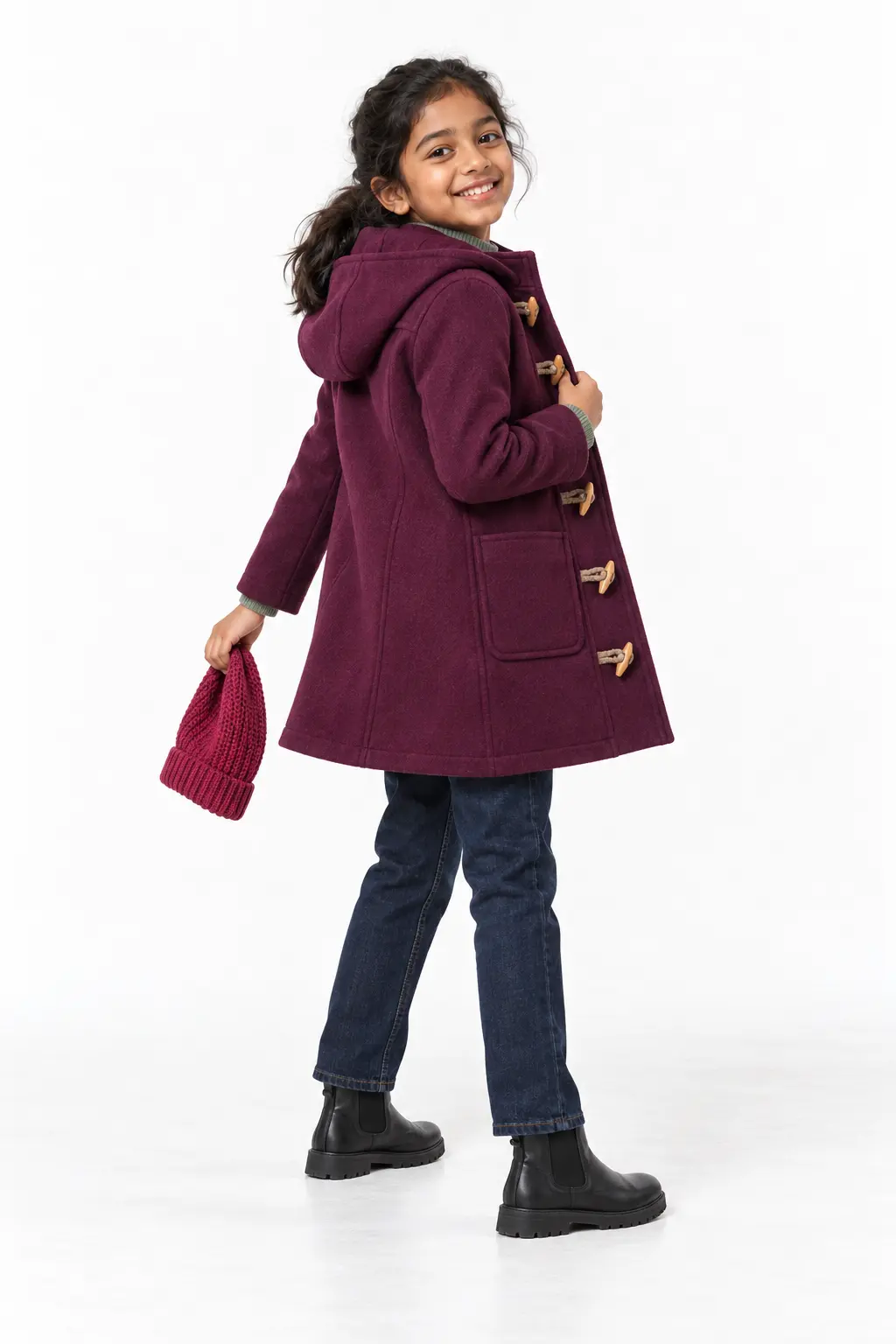
The final outfit is built around a knee-length plum duffle coat. A sage rib-knit tunic, dark-indigo straight jeans and black Chelsea boots form a simple base that can be worn after the coat comes off. The berry beanie adds warmth outdoors without complicating the indoor outfit.
Duffle coats are useful for school when the toggles are large enough for a child to manage. The hood should turn with the head rather than block side vision, and the coat should leave room for a knit layer without forcing the shoulders forward. A hem near the knee offers useful coverage while remaining short enough for stairs and active walking.
Dark denim is appropriate for dry, cold days and ordinary classroom wear. In steady rain or snow, a quicker-drying trouser may be more practical. Chelsea boots keep the fastening simple, but their soles still need adequate tread; a smooth fashion sole is not automatically suitable for a slippery winter route.
How to Choose Fabrics Without Creating Too Much Bulk
Warmth depends on the whole system, not only the thickness of one garment. Start with a comfortable base, add insulation where needed and use an outer layer for wind or moisture. For sustained outdoor cold, moisture-wicking base layers and weather-rated outerwear deserve priority over a purely decorative outfit.
Indoor pieces can be softer and less technical. Cotton-rich shirts, washable knits, fleece and stretch trousers are practical when they can be removed or adjusted. Avoid stacking several tight layers. Compression reduces comfort, limits movement and makes it harder for a child to notice which layer should come off.
Labels and care instructions matter. A school wardrobe becomes difficult if every knit requires specialist cleaning or a coat cannot dry between wet days. Choose pieces that suit the household laundry routine and label removable items clearly.
Fit, Movement and Footwear Checks
Ask the child to sit, reach overhead, take a long step and put on the backpack while wearing the complete outfit. These quick movements reveal tight shoulders, slipping waistbands, restrictive skirts and coat hems that feel longer in practice than they looked on a hanger.
Shoes require the same test. Check toe room with winter socks, make sure heels do not lift excessively and look for a flexible forefoot. Waterproofing, insulation and tread should match the actual route to school. A child travelling mainly by car has different needs from one walking through rain, slush or snow.
Fit should allow growth, but oversized winter clothing can interfere with movement and leave cold gaps. Prioritize adjustable waists, sensible ease and enough sleeve length over simply buying the largest size available.
A Five-Day Outfit Rotation
These five looks can cover a school week without behaving like five unrelated costumes:
Monday: puffer, fleece and straight trousers for a cold or wet start.
Tuesday: cardigan, shirt, plaid skirt and leggings for a polished classroom day.
Wednesday: sweatshirt dress, turtleneck and thermal leggings for maximum ease.
Thursday: quilted vest, cable knit and cargo joggers for an active timetable.
Friday: duffle coat, sage knit and dark denim for a versatile end-of-week outfit.
Repeat colors across small areas rather than duplicating the full outfits. Berry appears in the fleece, plaid, sweatshirt, trainers and beanie, which helps the wardrobe coordinate. Forest, navy and plum provide darker bases that are easier to combine with brighter outer layers.
Gallery